The Church commemorates the third finding of the venerable head of the holy prophet, Forerunner and Baptist of the Lord John, one of the most revered saints of the Christian world. In the church tradition, John the Baptist occupies a special place: after the Most Holy Theotokos, he is revered as the greatest of the saints, and several holidays throughout the year are associated with his name.
John the Baptist was the son of the priest Zachariah and the righteous Elizabeth. His birth was the fulfillment of a long prayer from pious parents who had no children until old age. The very story of his birth is perceived by the Church as a sign of God's special providence: archangel Gabriel announced to Zachariah about the future son, who was to prepare people for the coming of the Savior.
From a young age, John lived in the desert, spending his life in fasting, prayer, and strict abstinence. When he was about thirty years old, he went out to preach on the banks of the Jordan. His word was addressed to the human conscience: before external purification, inner repentance, a change of life, and a willingness to meet the Messiah are necessary. That is why John is called the Forerunner — the one who goes ahead of Christ and points Him out to people.
A special place in the prophet's earthly ministry is occupied by the Baptism of the Lord. When Jesus Christ came to John, the prophet testified about Him: "Behold the Lamb of God who takes away the sins of the world." With these words, John seemed to have completed his prophetic ministry: he did not attract the disciples to himself, but guided them to Christ.
But the directness and fearlessness of John the Baptist led him to a martyr's death. He openly denounced King Herod Antipas for his illegal cohabitation with Herodias. For this, the prophet was imprisoned, and then, at the request of Salome, the daughter of Herodias, beheaded. The body of the saint was buried by his disciples in the Samaritan city of Sebaste, and the venerable head of the Forerunner became one of the greatest shrines of the Christian world.
The feast of the third finding of the venerable head of John the Baptist is no longer connected with evangelical events, but with the subsequent history of the shrine. According to church tradition, during the unrest in Constantinople related to the exile of St. John Chrysostom, the head of John the Baptist was moved to the city of Emesa. Later, during the Saracen raids, it was moved to Komany. There, during the years of iconoclastic persecution, the shrine was hidden in the ground to protect it from desecration and destruction.
The third acquisition occurred around the year 850. After the restoration of icon veneration, the place where the venerable head of St. John was located was opened to Patriarch Ignatius during night prayer. The patriarch informed the emperor about this, and an embassy was sent to Komany. The shrine was indeed found in the indicated place — this is how the Church found the honest head of the great prophet for the third time.
Later, the shrine was moved back to Constantinople and laid in the court church on May 25. According to church tradition, part of the venerable head of John the Baptist is located on Mount Athos.
The memory of the third finding of the venerable head of John the Baptist reminds believers not only of the fate of the ancient shrine, but also of the spiritual meaning of the prophet's own ministry. John the Baptist became an example of fearless witness to truth, loyalty to God, and willingness to fulfill his calling to the end. His life and martyrdom show that true repentance begins with the courage to see the truth — about oneself, about the world, and about God.
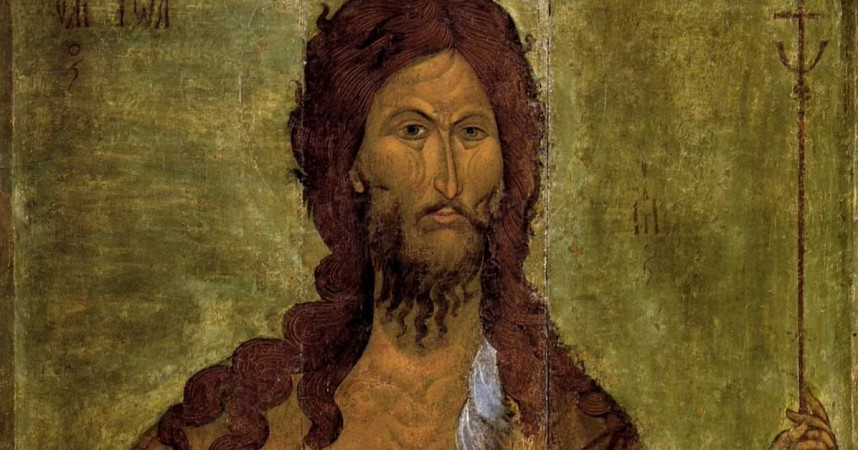
The Church remembers the third finding of the venerable head of John the Baptist
07.06.2026, 06:00


-

Faith vs. Fitness? The Real Battle Isn’t Where You Think
Alyona Bogolyubova
All Authors