St. Leonty, Bishop of Rostov, is one of the great archpastors of ancient Russia and the first enlighteners of the Rostov land. His life fell on the XI century, a time when the light of the Christian faith had already shone in Kiev, but many lands of Russia were still dominated by pagan customs.
According to the testimony of St. Simon, Bishop of Vladimir, St. Leonty was a tonsured monk of the Kiev Caves Monastery. Although he was born in Constantinople, he was of Russian descent. By God's providence, the future saint underwent spiritual education under the guidance of the Venerable Anthony and Theodosius of the Caves, the founders of Russian monasticism. It was from the Monastery of the Caves, which became a spiritual school for many ascetics, that the first bishop-monk of the Russian Church, St. Leonty, emerged.
In the forties of the XI century, he was appointed bishop and sent to the Rostov see. There the saint met with strong resistance from the pagans. Bishops Theodore and Hilarion had already tried to preach in Rostov land before him, but the locals expelled them. However, St. Leontius was not afraid of difficulties. As a good shepherd, he was ready to lay down his soul for the flock entrusted to him.
The saint's preaching was combined with patience, meekness and courage. The pagans threatened him more than once, once they beat him and drove him out of the city. But Saint Leontius did not abandon his ministry. He settled near Rostov, near the Brutovschina stream, where he built a small temple in the name of Archangel Michael. From here he continued to instruct people in the faith of Christ.
His attitude towards children was especially touching. The children of the local residents, attracted by the saint's kindness, began to come to him on their own. He taught them the basics of the Christian faith, and then baptized them. Gradually, following the children, adults began to come to the saint. So the word of God, sown with love and patience, began to bear fruit.
But discontent was growing among the inveterate pagans. One day, a large crowd, armed with clubs and weapons, went to the cathedral to kill or expel the saint. The clergy was afraid, but St. Leonty remained calm and strengthened those around him with the words: "Do not be afraid, children, they will not do anything to us without God's will." Dressed in holy robes and holding a cross in his hands, he went out to meet the angry people. His firmness, meekness, and gracious word stopped the crowd. Many of those who came believed and received Holy Baptism.
Since that time, the Christian faith has become more and more successful in the Rostov region. The ancient Rostov word says this: "Then the darkness of idolatry began to depart from us and the light of faith shone." Saint Leonty toured the surrounding areas, preached Christ the Savior and established Orthodoxy in places where idolatry had previously been performed.
The saint's apostolic asceticism ended with his martyrdom. In 1073, he was killed by pagans at the instigation of the Magi. The body of the saint was buried in Rostov the Great, in the church of the Most Holy Theotokos.
In 1164, during construction work, his incorruptible relics were found. The chronicler testifies that the body of the saint was preserved incorruptible, and the robes on it were as if they had recently been put on. In the hands of the saint was a scroll with the names of the priests and deacons enlightened by him. Numerous healings and miracles began to take place at his coffin.
The veneration of St. Leontius spread rapidly. The Rostov chair became known as the "chair of Leontius the Wonderworker," and when new bishops were appointed, the chroniclers noted that they were chosen by the prayers of St. Leontius. The celebration of his memory was established on May 23 / June 5 — the day of the finding of the relics.
Until the Time of Troubles, the relics of the saint openly resided in the Assumption Cathedral of Rostov the Great. After the destruction of the city, they were placed under a bushel at the southern wall of the chapel in the name of St. Leontius, where they remain today.
St. Leonty of Rostov is revered as an equal-to-the-Apostles educator, courageous confessor and great prayer book for the Russian land. His life reminds us that true preaching is accomplished not only by the word, but also by patience, love, meekness, and willingness to suffer for Christ.
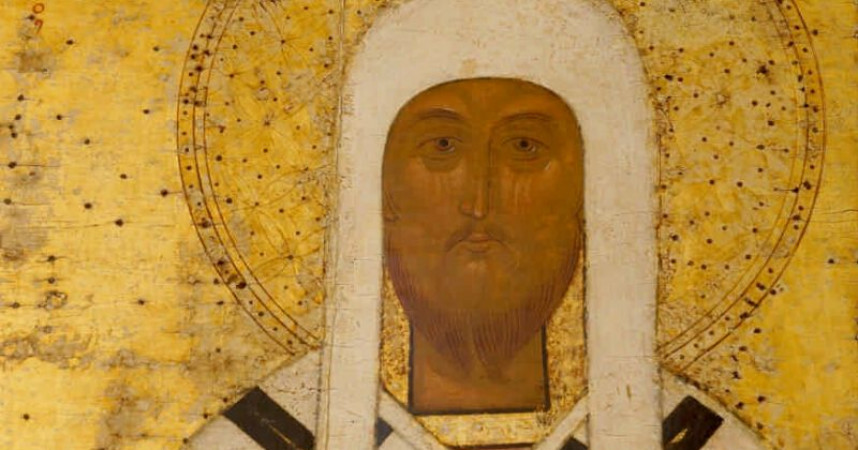
The church remembers St. Leonty, Bishop of Rostov
05.06.2026, 06:00




-
Woe to You, Actors
Alexey Shirikov
All Authors