The Orthodox Church honors the memory of St. Nikita Stylites, a saint of Pereyaslav, whose life path became a testimony to the depth of repentance and the power of God's mercy.
St. Nikita was a native of Pereyaslavl-Zalessky. Before turning to God, he was in charge of collecting state taxes and taxes. At that time, after Prince Yuri Dolgoruky moved the city of Pereyaslavl to a new location and built a stone temple in the name of the All-Merciful Savior, funds began to be intensively collected from residents. Nikita, who led these gatherings, used his position cruelly and selfishly: he oppressed people, robbed the poor, and collected large sums for himself. This went on for many years.
But the Lord, who desires salvation for every human being, touched his heart as well. One day Nikita came to the temple and heard the words of the prophet Isaiah: "Wash and be cleansed; put away your evil deeds from before my eyes; cease doing evil; learn to do good; seek righteousness; save the oppressed; protect the orphan; intercede for the widow" (Isaiah 1:16-17). These words shocked him. He couldn't sleep all night, thinking over and over again what he had heard.
The next morning Nikita tried to drown out the anxiety of his conscience with his usual gaiety and invited the guests to his place. But the Lord called him to repentance again. When the wife was preparing a treat, she was horrified to see human remains in a boiling pot. Nikita saw the same thing and realized that he was acting like a murderer with his extortion and cruelty. Shouting, "Lord, guide me on Your path!" he left home and hurried to the monastery of the Holy Great Martyr Nikita, located near the city.
When Nikita arrived at the monastery, he fell at the abbot's feet in tears and asked: "Save my dying soul." The abbot, wishing to test the sincerity of his repentance, ordered him to stand at the monastery gates for three days and openly confess his sins to those passing by. Nikita humbly fulfilled this obedience. Three days later, he was found not at the gate, but in the swamp: he was lying there, covered with mosquitoes and midges, his body was covered in blood. When asked by the abbot what he was doing to himself, Nikita replied again: "Father, save my dying soul." Then the abbot led him into a monastery, dressed him in a hair shirt and tonsured him into monasticism.
From that time on, the monk's whole life became a feat of repentance. He spent his days and nights in prayer, reading psalms and the lives of saints. With the blessing of the abbot, Nikita took on heavy chains. Later, he intensified his feat: he dug a deep round pit and began to struggle in it, like the ancient stylites. He combined his solitude with incessant prayer, and went to church through a narrow underground passage leading under the church wall.
The life of St. Nikita ended in martyrdom. One night, relatives who came to him for a blessing saw his chains and crosses. Mistaking the shining iron for silver, they decided to take possession of them. On the night of May 24, 1186, they dismantled the covering of the pillar, killed the saint, took off his crosses and chains and fled.
Before the morning service, the sexton discovered the dismantled roof of the pillar and informed the abbot about it. The brethren came to the place of the monk's asceticism and saw him murdered. A fragrance emanated from the saint's body.
The murderers stopped on the banks of the Volga River and decided to divide the stolen goods. But when they saw that it was not silver in front of them, but plain iron, they threw the chains into the river. However, the Lord also glorified these signs of the saint's secret labors. That same night, the pious elder Simeon from the Yaroslavl Monastery of the Holy Apostles Peter and Paul saw three bright rays over the Volga. When the priests and residents of the city came to the river, they saw crosses and chains floating wonderfully on the water. With prayer and reverence, they were transferred to the monastery of the Great Martyr Nikita and laid on the coffin of the monk. At the same time, healings were performed.
Later, in the 15th century, St. Photius, Metropolitan of Moscow, blessed the unveiling of the relics of St. Nikita. After the prayer service, the brethren opened the birch bark that had been wrapped around the incorruptible body of the saint, but the grave was miraculously covered with earth again, and the relics remained hidden.
The memory of St. Nikita Stylites reminds believers that even the gravest sin is not stronger than God's mercy if a person sincerely repents and changes his life. His path is the path from cruelty to humility, from unrighteousness to prayer, from earthly greed to holiness.
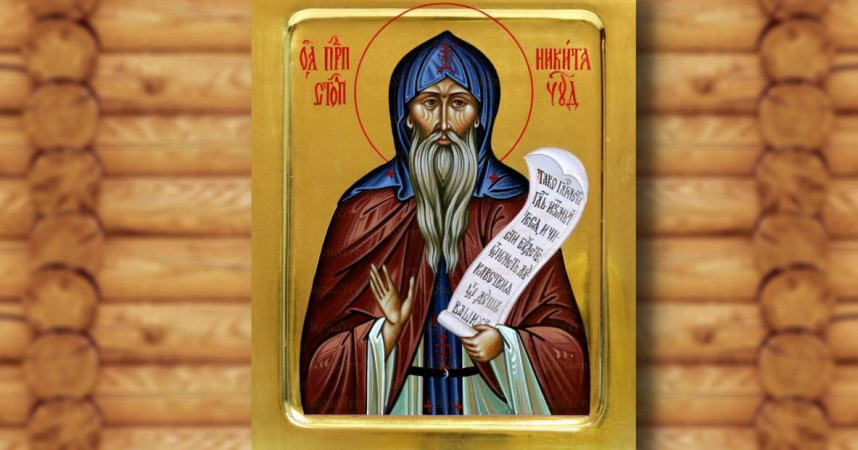
The Church remembers St. Nikita Stylites, Pereyaslavsky
06.06.2026, 06:00




-
Woe to You, Actors
Alexey Shirikov
All Authors