St. Anthony of Rome was born in Rome in 1067 to wealthy parents who adhered to the Orthodox confession of faith, and was raised by them in piety. Having lost his parents at the age of 17, he began to study the writings of his fathers in Greek. Then he distributed part of the inheritance to the poor, and put the other into a wooden barrel and launched it into the sea. He himself took tonsure in one of the desert hermitages, where he lived for 20 years.
The persecution of the Orthodox by the Latins forced the brethren to disperse. St. Anthony wandered, moving from place to place, until he found a large stone on the deserted seashore, on which he lived for a whole year in fasting and prayer. A terrible storm that broke out on September 5, 1105, tore off the stone on which St. Anthony was located and carried him into the sea. On the feast of the Nativity of the Blessed Virgin Mary, the stone stopped 3 versts from Novgorod on the banks of the Volkhov River near the village of Volkhovsky. This event is recorded in the Novgorod chronicles. At this place, with the blessing of St. Nikita the Hermit of Novgorod (+ 1109, May 14), the monk founded a monastery in honor of the Nativity of the Most Holy Theotokos.
The next year, fishermen fished out a barrel with the inheritance of St. Anthony, which had been put into the sea many years ago. Having indicated what was in the barrel, the monk took the barrel and bought land for the monastery.
Spiritual asceticism was combined in the monastery with intense work. St. Anthony made sure that the monastic income provided assistance to the poor, orphans and widows. In 1117, the monk began stone construction in the monastery. The cathedral in honor of the Nativity of the Most Holy Theotokos, built during the life of the monk in 1117-1119 by the famous Novgorod architect Peter, with frescoes from 1125, has been preserved to this day. In 1131, St. Niphon of Novgorod appointed St. Anthony abbot of the monastery. Saint Anthony died on August 3, 1147, aged 79, and was buried by Saint Niphon.
His relics were found incorruptible on July 1, 1597 and placed in a silver-bound shrine. Since that time, a procession from St. Sophia Cathedral has been established in his memory, on the first Friday after St. Peter's Day. At the shrine of the monk there was a branch of sedge, with which Anthony sailed from Rome, holding it in his hand. This is how he is depicted on icons. Until the 1930s, the relics of St. Anthony rested in the cathedral monastery Church of the Nativity of the Blessed Virgin Mary, in the chapel named after him. Their fate is currently unknown.
St. Anthony was glorified in 1597. His memory is also celebrated (in honor of the finding of his relics) on the first Friday after the celebration of the First Apostles Peter and Paul (June 29) and on January 17, on namesake day, when the memory of St. Anthony the Great is celebrated. The original life of St. Anthony the Roman was written shortly after his death by his disciple and successor in the abbacy, Hierophant Andrei, and the treatment of the life, the legend of the finding of the relics, and a word of praise were written by Monk Nifont, a monk of the Antoniev Monastery, in 1598 (published in the Orthodox Interlocutor, Kazan, 1858, May–June). The spiritual and bill of sale of St. Anthony, issued repeatedly, have been preserved.
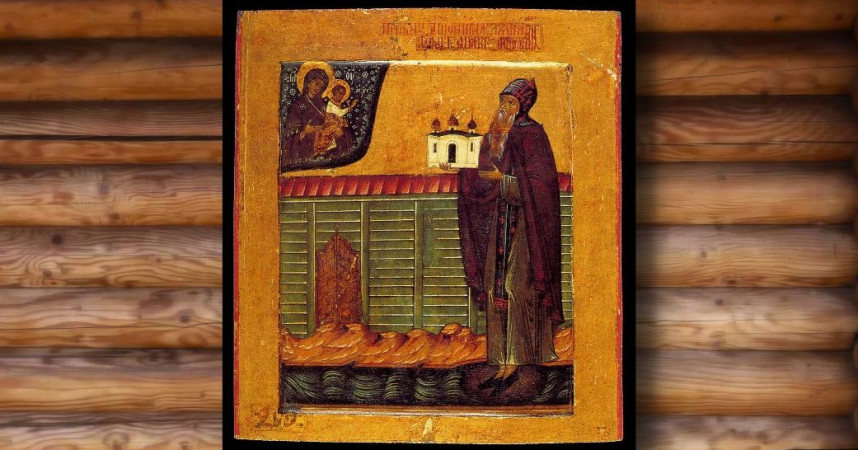
The Church commemorates St. Anthony the Roman
16.08.2025, 06:00


-

Faith vs. Fitness? The Real Battle Isn’t Where You Think
Alyona Bogolyubova
All Authors