The Holy Equal-to-the-Apostles Emperor Constantine and his mother, Tsarina Elena, occupy a special place in the history of the Christian Church. Their lives and works are connected with the end of the era of persecution, the establishment of Christianity in the Roman Empire and the acquisition of one of the greatest shrines — the Life-giving Cross of the Lord.
Emperor Constantine the Great was born into the family of Caesar Constantius Chlorus, who ruled Gaul and Britain. His mother, Saint Helena, was a Christian and raised her son in respect for the Christian faith. At that time, Christians in many areas of the Roman Empire were severely persecuted, but Constantine's father did not allow persecution in the territories under his control.
After the death of Constantius Chlorus in 306, Constantine was proclaimed emperor. One of his first decisions was to grant freedom to Christians in the lands he ruled. In the struggle for power, Konstantin had to face strong opponents. Before the decisive battle, he prayed to God for help and, according to church tradition, saw the shining sign of the Cross in the sky with the words: "Win this." This event was a spiritual turning point for him and strengthened his conviction of the truth of the Christian faith.
In 313, Emperor Constantine issued the Edict of Milan, which granted Christians the right to freely practice their faith. After almost three centuries of persecution, the Church has been given the opportunity to openly worship, build churches, and develop church life. Later, as the sole ruler of the Roman Empire, Constantine extended this freedom to all its regions.
The emperor understood that Christianity could become the spiritual foundation of a vast state. He supported the Church, returned confessors from exile, took care of the clergy, and built churches. Abandoning the pagan heritage of ancient Rome, Constantine moved the capital of the empire to the East — to the city of Byzantium, which was named Constantinople.
The finding of the Holy Cross occupies a special place in the life of Saints Constantine and Elena. Wanting to find the shrine on which the Savior was crucified, the emperor sent his mother to Jerusalem. Having received the necessary powers and funds from her son, Holy Tsarina Elena, together with Patriarch Macarius of Jerusalem, began the search. By God's Providence, in the year 326, the Life-giving Cross was found.
While in the Holy Land, Tsarina Elena worked hard for the Church: she ordered that the places associated with the earthly life of the Lord and the Mother of God be cleansed of traces of pagan worship and Christian churches be erected there. By order of Emperor Constantine, a magnificent church was built over the cave of the Holy Sepulchre in honor of the Resurrection of Christ. Saint Helena handed over part of the Life-Giving Cross to the emperor, and left the shrine itself for safekeeping in Jerusalem.
Saint Helena became famous not only as a queen, but also as a person of deep faith and mercy. In Jerusalem, she generously helped the poor, arranged meals for the needy, and, according to legend, served them herself. For her efforts to find the Cross of the Lord and caring for the Church, she was glorified as an equal-to-the-Apostles.
Under Emperor Constantine, the Church gained freedom, but faced a new danger — internal divisions and heresies. The heresy of Arius, who denied the Divine dignity of the Lord Jesus Christ, became a particularly serious test. In order to protect Orthodox teaching, the First Ecumenical Council was convened in Nicaea in 325 by order of the emperor. It brought together 318 bishops, among whom were confessors of the faith and great hierarchs of the Church. The Council condemned Arius' teaching and affirmed the truth that the Son of God is consubstantial with the Father.
Until the end of his life, Emperor Constantine continued to take care of the Church. Shortly before his death, he received Holy Baptism, which, according to the church's understanding, he had been preparing for all his life. The Holy Equal-to-the-Apostles Constantine died in 337, on the day of Pentecost, and was buried in the Church of the Holy Apostles.
The memory of Saints Constantine and Elena, Equal-to-the-Apostles, reminds us of how faith, statesmanship, and personal service can change the course of history. Thanks to their labors, Christianity gained freedom, the Church gained the opportunity for open witness, and the world gained a great example of royal service to Christ.
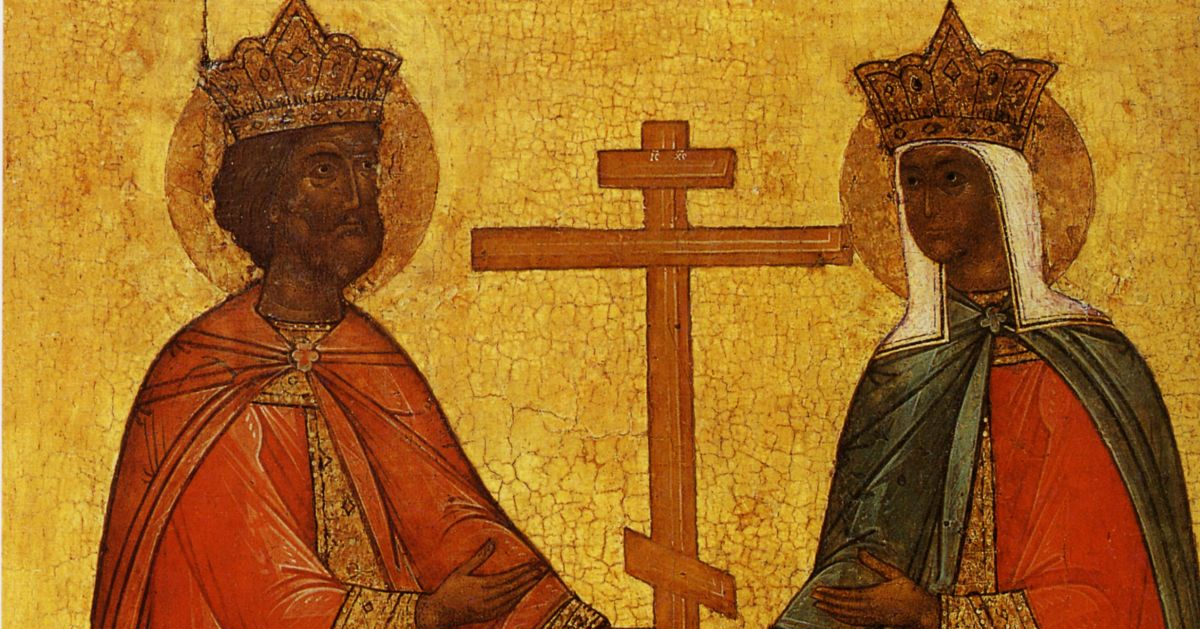
The Church remembers Equal-to-the-Apostles Emperor Constantine and Tsarina Elena.
03.06.2026, 06:00


-

What Should We Remember?
Olga Kutanina
All Authors