The Monk Herman of Alaska was born in the city of Serpukhov, near Moscow, in 1757 in a merchant family. His worldly name and surname are unknown. At the age of sixteen, he entered the monastic path. At first, the monk carried out obedience in the Trinity-Sergius Desert, located in the vicinity of St. Petersburg, on the shore of the Gulf of Finland (the deserts belonged to the Trinity-Sergius Lavra).
The future missionary worked in the monastery for about five years. Desiring complete solitude and silence, the Monk Herman retires to Valaam. The Valaam Monastery, located on the islands of Lake Ladoga, was cut off from the outside world for up to 8 months a year.
After a thorough trial by various obediences, Abbot Nazarius blessed the young ascetic for permanent residence in the forest, in a deserted solitude. On holidays, when coming to the monastery, the monk performed clerical obedience (he had a beautiful voice). In the Valaam monastery, Saint Herman took monastic vows.
It is believed that St. Herman came to Valaam in 1778. In the same year, St. Seraphim came to the Sarov monastery. The circumstances of the life of St. Herman on Valaam remind us of the solitary exploits of his great contemporary, the Sarov miracle worker. Like St. Seraphim, the Valaam ascetic was distinguished by an exceptional and penetrating knowledge of the spirit and letter of the Holy Scriptures, the works of the holy fathers and teachers of the Church.
The spiritual leader and mentor of the future missionary was Abbot Nazari, the Sarov elder, who introduced the charter of the Sarov Desert on Valaam. Thus, the gracious system of Sarov asceticism, in which the spiritual growth of St. Herman on Valaam took place, became an integral part of his soul and made him dear and exceptionally close in spirit to St. Seraphim, the Sarov miracle worker. There is information that St. Seraphim, in turn, used the instructions of Elder Nazarius during his residence in Sarov.
After 15 years of the Monk Herman's stay in Valaam, the Lord called the humble monk to the apostolic ministry and sent him to preach the Gospel and baptize the pagans of the sparsely populated and harsh region of Alaska and the adjacent islands of North America. To this end, in 1793, a spiritual Mission was established, called the Kodiak Mission, with its center on Kodiak Island. Archimandrite Joasaph (Bolotov), a monk of the Valaam Monastery, was appointed head of the mission. Among the other Mission staff were five other monks of the Valaam Monastery, among them the Monk Herman, whom the Lord blessed to work longer and more fruitfully in the gospel than any other member of the Mission.
Upon arrival on Kodiak Island, the missionaries immediately set about building a temple and converting pagans. "1794, September 24, I have been living on Kodiak Island. Thank God, more than 700 Americans have been baptized, and more than 2,000 marriages have been married, a church has been built, and time will allow - we will make another one, and two marching ones, or even a fifth one needs to be done," Archimandrite Joasaph notes in one of the letters.
Father Herman, in his new place, initially carried out obedience in the bakery and took care of the household chores of the Mission.
Under the leadership of Archimandrite Joasaph (later Bishop), the Mission was not for long: during a storm (in 1799) His Grace Joasaph and his companions perished in the waves of the ocean. In 1804, only one hieromonk of the Alexander Nevsky Lavra, Gideon, was sent to help the surviving missionaries. He led the Mission for a while. He took care of a school for the children of baptized Aleuts. In 1807, Hieromonk Gideon left the camp of missionaries forever, placing all responsibility on the Monk Herman, who until his death remained a spiritual father, pastor and trustee of human souls in the Mission entrusted to him. They wanted to ordain the monk to the rank of hieromonk and raise him to the rank of archimandrite, but the humble monk refused any elevation and remained a simple monk until the end of his days.
Reverend Herman was a true good shepherd for the locals and protected them as best he could from evil and predatory people who saw the islanders only as an object for cruel exploitation. Therefore, it would not be surprising if the converts rejected the faith of the aliens, who increasingly began to act as exploiters and oppressors (industrialists who came for profit), and would return to their superstitions. It is a great merit of Reverend Herman that this did not happen. Steadfastly and persistently, having no support other than his fervent faith, the elder continued his intercession for the offended and oppressed, seeing in this his duty and vocation, the essence of which he expressed in surprisingly simple words: "I am the lowest servant of the local peoples and a nurse."
The secret exploits and cell prayers of the elder remained unknown to the world, but the light of his blessed life was visible to those around him, which took place in conditions of complete self-denial, non-possessiveness and severe disregard for all amenities. His clothes were the most shabby and very dilapidated. With all his appearance and all his habits, Elder Herman vividly reminded his contemporaries of the ancient hermits, famous for their feats of abstinence and Worship. The conversation of the elder made an irresistible impression on the listeners. His interlocutors were particularly struck by the clarity of his thoughts, clarity and speed of judgment. The divine grace that filled the soul of St. Herman transformed the hearts of the people who communicated with him. This is vividly evidenced by the case of S. I. Yanovsky, the ruler of the administration of the Russian-American Company, who assumed his duties in 1817. Semyon Ivanovich Yanovsky, an aristocrat by birth, was a well-educated and well-read man, but his religious and philosophical views were reduced to deism, fashionable at that time. (Deism is a religious and philosophical doctrine, widespread in the XVII-XVIII centuries., which allowed the existence of God only as the primary cause of the world and denied the existence of God as a Person.)
In fact, he did not know Christianity (although he was formally considered a Christian). Orthodoxy, the Church, and the Sacraments were concepts for him that did not deserve serious attention. Reverend Herman had a lot of conversations with him. Subsequently, S. I. Yanovsky wrote: "With such constant conversations and prayers of the holy elder, the Lord completely turned me to the right path, and I became a true Christian." He called the elder a "holy man", a "great ascetic"; as a great jewel, he kept the letters of St. Herman. Many other contemporaries felt the same reverence for the personality of the saint. Father Herman lived first near the mission temple, on Kodiak, and then moved to the nearby island of Spruce, which he called "New Valaam". Spruce Island was the last refuge in the arduous apostolic wanderings of the holy elder.
The Monk Herman predicted to his spiritual children the time of his death and explained how to bury him. On December 13, 1837, he asked to light candles in front of the icons and read the Acts of the Holy Apostles. While reading about the works of the holy evangelists, the holy elder Herman passed from earthly labors to heavenly rest at the 81st year of his life. A simple wooden monument was originally erected over the grave of the elder, then a modest wooden church was built, consecrated in the name of St. Sergius and Herman, the Valaam miracle Workers.
In this temple there is an ancient image of St. Seraphim of Sarov, which was in the cell of the holy elder Herman during his lifetime: the elder loved and honored his illustrious contemporary and the great worker in God's field who was unanimous with him. It pleased the Lord to simultaneously bless these two reverent lovers of silence and intelligent work for the great feat of serving people. The Monk Herman responded with love to the needs and sorrows of people in the days of his earthly life. He does not leave those who cry out to him in trouble even after his death. The most famous case of the prayerful intercession of St. Herman is found in the life of the first Orthodox bishop in America, St. Innocent (commemorated on March 31 and September 2). In 1842, the saint on the brig Okhotsk was heading to the island of Spruce. Due to the storm, the ship could not enter the harbor for a long time, and the lives of the crew and passengers were at risk. St. Innocent prayed to St. Herman: "If you, Father Herman, have pleased the Lord, then let the wind change." Less than a quarter of an hour later, the wind changed and became favorable. And soon the saint, who escaped from the storm, served a memorial service at the grave of St. Herman. Since the 1860s, the Russian Orthodox Church has known about the great local veneration of the memory of Elder Herman on Kodiak. In 1867, one of the Alaskan bishops wrote a note about his life and miracles. The first public report on Father Herman was published in the Valaam Monastery in Finland in 1894. In the 1930s, another Russian Orthodox monk, Archimandrite Gerasim (Schmaltz), arrived on the island of Spruce and lived there for a long time, like St. Herman more than a hundred years before him. Before his death in 1969, Archimandrite Gerasim discovered the remains of his glorious predecessor and built a small chapel here. The healings associated with Elder Herman's prayerful intercession were recorded over a long period (from the time of his life until 1970). In March 1969, the Council of Bishops of the Russian Orthodox Greek Catholic Church in America, chaired by Archbishop Irenaeus of New York, Metropolitan of All America and Canada, celebrated the glorification of the Monk of Alaska. Through this canonization, the Church formally sealed with its seal what many natural Alaskans have always known: the Monk Herman fulfilled his Christian vocation with dignity and continues to intercede before God for the living.
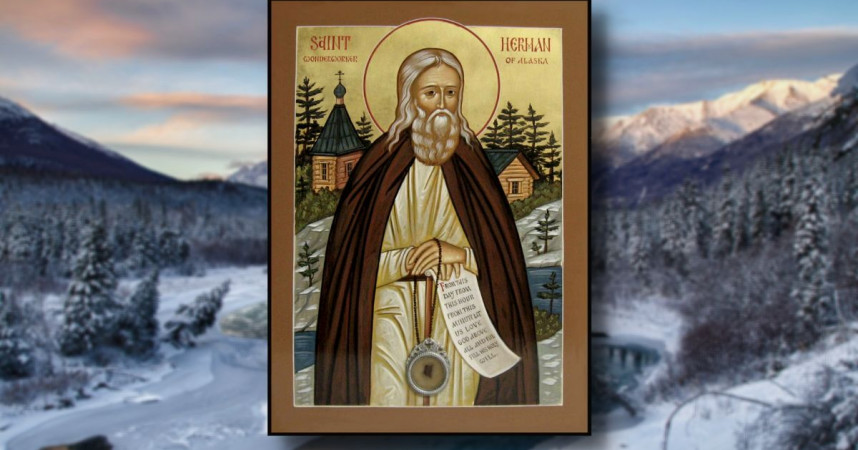
The Church remembers the Reverend Herman of Alaska
26.12.2023, 06:00


-

Faith vs. Fitness? The Real Battle Isn’t Where You Think
Alyona Bogolyubova
All Authors