
Greece has recovered 53 ecclesiastical objects dating from the 16th to the 19th centuries that had been held in Bulgaria for 109 years. The collection includes historic crosses, icons, silver icon covers and reliquaries.
The artifacts are on display at the Museum of Byzantine Culture in Thessaloniki until November 5. After the exhibition closes, they are expected to be returned to the monasteries and ecclesiastical institutions from which they originated.
According to Greek public broadcaster ERT, the objects were removed from monasteries in Macedonia in 1917, during the First World War. Their return marks the first result of a cultural heritage agreement signed by the culture ministers of Greece and Bulgaria on September 29, 2026.
Among the most valuable items are two sets of liturgical ripidia dating to the 16th century, crafted from gilded silver and decorated with enamel. These ceremonial fans, adorned with images of angels and seraphim, are used in Orthodox worship and symbolize the heavenly powers believed to be invisibly present during the celebration of the Eucharist.
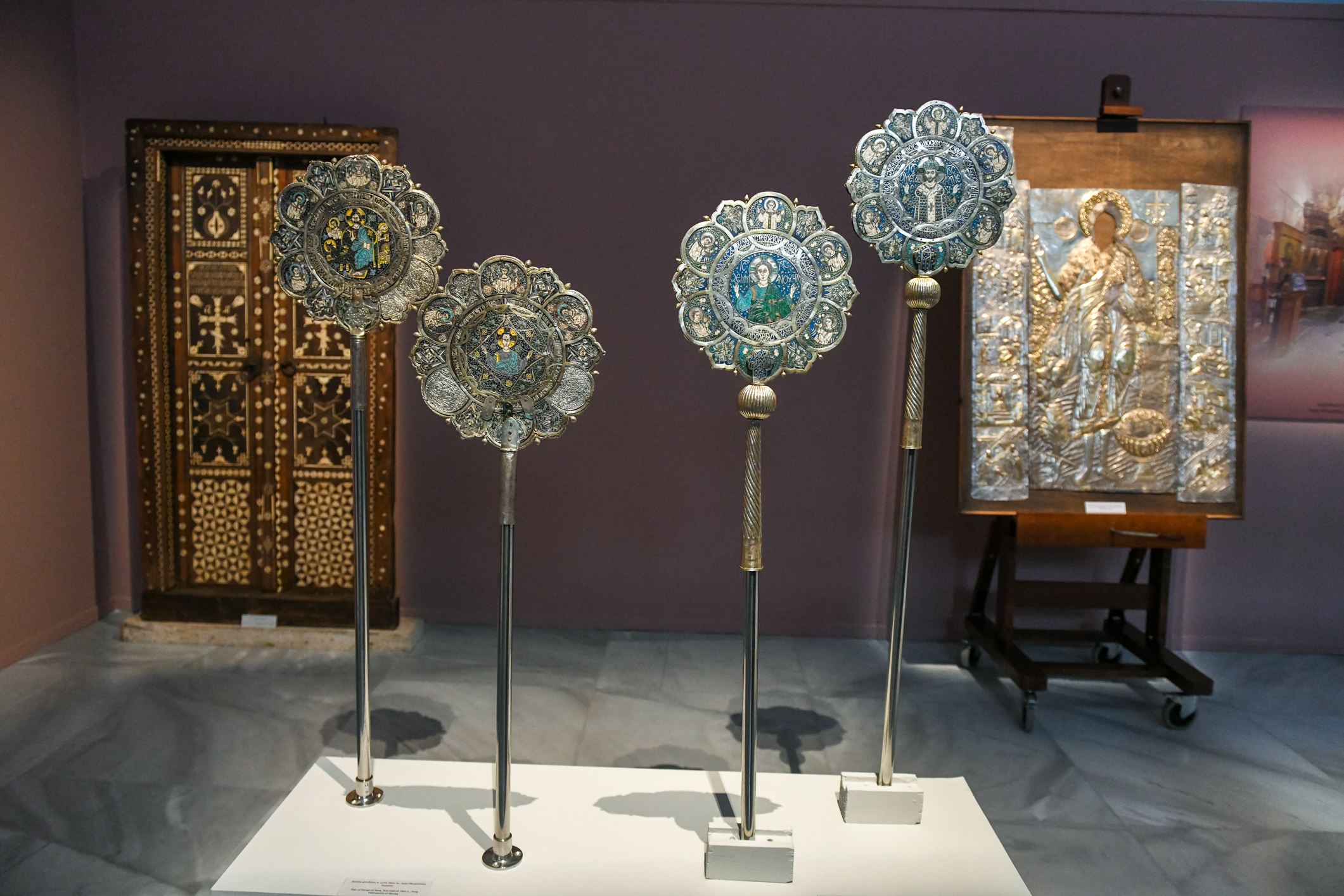
Another notable artifact is a silver cover for an icon of St. John the Baptist, decorated with scenes from the saint’s life. The recovered elements complement the icon preserved in the iconostasis of the Monastery of St. John the Baptist in Serres, helping restore its historical integrity.
The collection also includes two large processional and altar crosses decorated with images of saints. One features intricate silver filigree and a decorative crown supported by angels.
Several reliquaries are also among the returned objects. One bears the date March 25, 1821, which marks the beginning of the Greek Revolution against Ottoman rule.
Other artifacts include an old wooden door inlaid with mother-of-pearl and bone, liturgical vestments, church vessels, a bishop’s throne and a lectern.
Most of the objects originated from the Monastery of St. John the Baptist in Serres, the Monastery of the Virgin Eikosifinissa and the Metropolis of Serres and Nigrita. According to ERT, the collection was transferred to Sofia in 1917.
Greek Culture Minister Lina Mendoni described the agreement with Bulgaria as an important step toward recovering other lost cultural treasures.
The next phase of cooperation will involve examining Bulgarian museum catalogs and arranging inspections by Greek specialists. The work is intended to establish the provenance of additional manuscripts and ecclesiastical artifacts and prepare further restitution claims.
In September 2026, Greece and Bulgaria also agreed to exchange cultural heritage objects. As part of the arrangement, Greece returned the remains of Tsar Samuel, who ruled from 997 to 1014, to Bulgaria. The remains were discovered in the Basilica of St. Achillius in 1965 and had been kept in Thessaloniki.
The return of the 53 ecclesiastical objects represents a significant step in restoring religious and cultural heritage to the Greek monasteries and church institutions to which the artifacts historically belonged.







-

Too Much Freedom?
Alexey Shirikov
All Authors