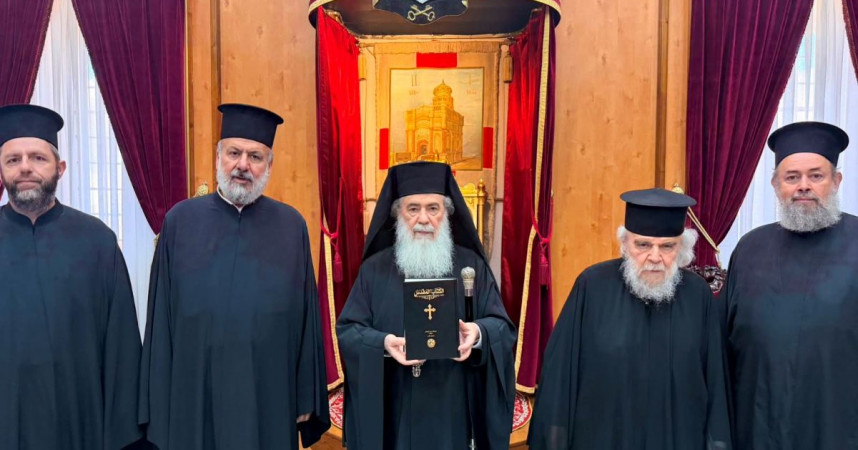
The Greek Orthodox Patriarchate of Jerusalem has completed the printing of a full Arabic translation of the Holy Scriptures, including both the Old and New Testaments, in a major initiative aimed at serving Arabic-speaking Orthodox Christians in the Holy Land.
According to the Jerusalem Church’s official website, the project was carried out under the initiative and patronage of Patriarch Theophilos III in cooperation with the Bible Society of the Holy Land. The new edition will be distributed free of charge to parishes, theological schools, and individual faithful across the region.
Church officials said the publication is primarily intended for the Arabic-speaking flock of the Jerusalem Orthodox Church, as well as other Christians in the region for whom Arabic is their native language.
The Patriarchate emphasized that Arabic remains a central language of church life in the Holy Land alongside Greek. A significant portion of the Church’s faithful consists of Arab Christians living in Palestine, Jordan, and Israel, for whom Arabic is the primary language of daily communication and pastoral activity.
The initiative is part of broader efforts by the Jerusalem Patriarchate to strengthen ties with local communities, particularly through education and youth outreach. Parish schools, youth movements, and Orthodox scouting organizations in the region operate largely in Arabic, reflecting the linguistic and cultural identity of local believers.
While the leadership of the Jerusalem Patriarchate has historically been composed predominantly of Greek clergy, its congregation is largely Arab. As a result, Arabic-language religious publications and educational programs are viewed as essential tools for maintaining strong connections between church hierarchy and local communities.
International observers note that Christian communities in the Middle East have faced significant demographic decline in recent decades due to emigration, economic hardship, and regional instability. In this context, church institutions have increasingly focused on strengthening religious identity and preserving access to Christian heritage in native languages.
Church leaders said the new Arabic Bible represents an important step in that direction, ensuring that Scripture is more accessible to local faithful and reinforcing the spiritual continuity of the Church in the region.


-

What Should We Remember?
Olga Kutanina
All Authors