
Archbishop Alexei of Alaska of the Orthodox Church in America has concluded a pastoral journey to some of the most remote Orthodox communities in the Aleutian Islands, visiting parishes whose origins date back to the first Russian Orthodox missionaries who arrived in Alaska at the end of the 18th century.
Despite severe weather, limited transportation, and declining populations, the archbishop's visit underscored the continued vitality of Orthodox communities that have preserved their faith and traditions for more than two centuries.
In early July, Archbishop Alexei presided over the patronal feast of the Church of the Holy Apostles Peter and Paul on St. Paul Island in the Pribilof Islands. Several days later, after three unsuccessful attempts caused by poor flying conditions, he reached the village of Nikolski on Umnak Island, one of the most isolated communities in the United States, according to the Diocese of Sitka and Alaska.
"The Gospel has never come easily to the Aleutian Islands," the diocese said in a statement reflecting on the archbishop's journey.
During his visit to Nikolski, Archbishop Alexei met with local residents, blessed a newly opened community center, and offered encouragement to the village's Orthodox faithful. Although weather conditions prevented the celebration of the Divine Liturgy, diocesan officials said the visit itself served as a powerful reminder that church life continues even in the most remote corners of North America.
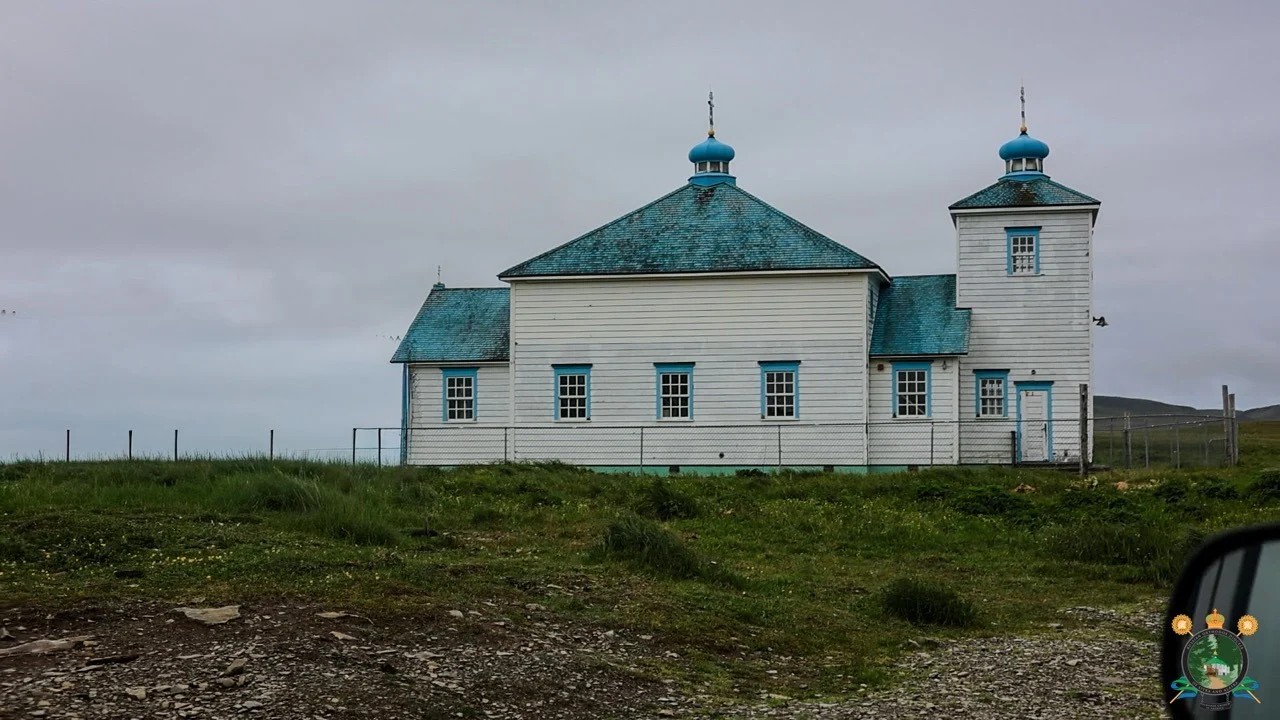
The Orthodox parish in Nikolski traces its roots to the era of Russian America. Over the past two centuries, the Church of St. Nicholas has been destroyed by fire several times, but each time it was rebuilt by local residents. St. Innocent (Veniaminov), one of Alaska's most celebrated missionaries, played a role in the development of the parish, while the current wooden church, completed in 1930, continues to reflect the traditional style of Russian ecclesiastical architecture.
The Church of Saints Peter and Paul on St. Paul Island also occupies an important place in Alaska's Orthodox history. According to the diocese, St. Innocent began many of his missionary journeys across the Aleutian Islands from the community, while St. Jacob Netsvetov—the first Orthodox priest of Aleut heritage—departed from there to evangelize vast regions of Alaska.
Today, the parishes scattered across the Aleutian Islands often number only a few dozen worshippers, yet they continue to maintain the same liturgical life established by their missionary founders more than 200 years ago. During his sermon on St. Paul Island, Archbishop Alexei said preserving this spiritual heritage is the responsibility of the present generation.
Diocesan representatives also noted the growing challenges facing Alaska's small Aleut villages. As younger residents move to the mainland in search of education and employment, many communities continue to lose population and face an uncertain future.
"When a village disappears, it is not only homes that are lost," the diocese said. "Languages fall silent, traditions fade, and churches where generations once prayed are left empty."
The Diocese of Alaska is one of the oldest Orthodox dioceses in North America and marks the birthplace of organized Orthodox Christianity in what is now the United States.
The first official Orthodox mission arrived in Alaska in 1794 from Russia's Valaam Monastery at the invitation of the Russian-American Company. Eight monks traveled across Siberia and the Pacific Ocean to Kodiak Island to minister to Russian settlers and preach the Gospel among Alaska Native peoples. Among them was St. Herman of Alaska, who later became the first Orthodox saint of North America.
Orthodox missionary work flourished after the arrival of St. Innocent (Veniaminov) in 1824. He learned Aleut and other Indigenous languages, developed written alphabets for them, translated Scripture and liturgical texts, established schools, and promoted education while insisting that Christian mission must respect the language and culture of local peoples.
Following the sale of Alaska to the United States in 1867, Orthodox parishes remained active, and the diocese gradually expanded its ministry across North America. Church administration was later transferred from Alaska to San Francisco and eventually to New York, laying the institutional foundations for what would become the Orthodox Church in America.
Today, the Aleutian Islands remain one of the few regions in the United States where Orthodox Christianity has formed part of the daily life of Indigenous communities for more than two centuries. Villages such as Nikolski continue to serve as living reminders of the enduring legacy of Russian America, preserving a tradition that survives not only in historical records but also in active parish life at the edge of the North American continent.


-

The Most Valuable Lesson Didn't Come from the Textbook
Tatiana Lyubomirskaya
All Authors