Bulgaria has officially inaugurated its first international pilgrimage route, the “Path to the Relics of St. John the Baptist,” a project already being referred to as “Camino Bulgaria” in recognition of its inspiration from Europe’s famous pilgrimage trails.
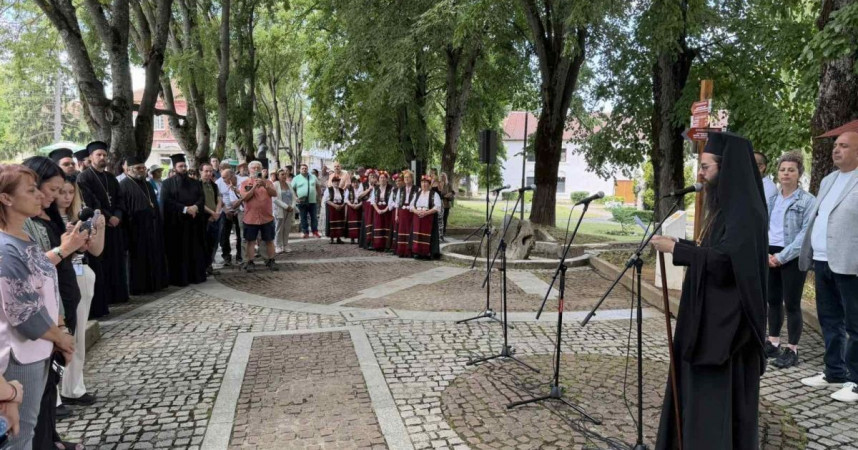
The opening ceremony took place in the southeastern Bulgarian town of Malko Tarnovo and began with a prayer service at the Church of the Assumption of the Virgin Mary. The service was led by Metropolitan Arseniy of Sliven and attended by local officials, project organizers, guests from Spain, as well as pilgrims and tourists from several countries.
Following the religious ceremony, an official launch event was held in the town’s central square. Representatives of Bulgarian and European pilgrimage organizations, scholars, diplomats, and experts in cultural and religious tourism addressed participants and welcomed the new initiative.
The route starts in Malko Tarnovo, passes through the scenic Strandzha region, and ends in the Black Sea town of Sozopol at the Church of Saints Cyril and Methodius. The church houses relics believed to belong to St. John the Baptist, which were discovered during archaeological excavations on St. Ivan Island in 2010.
According to organizers, the new trail aims to combine spiritual pilgrimage, cultural tourism, and exploration of Bulgaria’s historical heritage. The project draws inspiration from well-known European pilgrimage routes, including Spain’s Camino de Santiago, Italy’s Via Francigena, and Portugal’s Rota Vicentina.
In his address, Metropolitan Arseniy emphasized that every pilgrimage is, above all, a spiritual journey. He encouraged participants to walk the route with faith, humility, and love, following the example of St. John the Baptist.
Camino de Santiago, also known as the Way of St. James, remains Europe’s most famous pilgrimage network. Since the Middle Ages, it has attracted pilgrims traveling to the tomb of the Apostle James in Santiago de Compostela, Spain, becoming one of Christianity’s most important pilgrimage destinations alongside Jerusalem and Rome.
Today, however, the term “Camino” is increasingly used to describe similar organized pilgrimage routes across Europe. These trails combine spiritual traditions, cultural heritage, infrastructure for long-distance walkers, and a clearly defined sacred destination.
Like other Camino routes, Camino Bulgaria passes through churches, monasteries, historical landmarks, and natural attractions, offering participants an opportunity to experience both the country’s religious heritage and its natural beauty. Organizers hope the new route will strengthen Bulgaria’s position on Europe’s growing network of pilgrimage and cultural tourism destinations.






-

The Right Moment
Alyona Bogolyubova
All Authors