On July 23, 2026, TASS hosted a press conference entitled "Gambling in Russia. How to resist addiction." The meeting was attended by Archpriest Mikhail Potokin, Chairman of the Synodal Department for Church Charity and Social Service, Artem Metelev, Chairman of the State Duma Committee on Youth Policy, and Director of the National Research Center for Narcology, a branch of the V.P. NMC of Psychiatry and Narcology. Anatoly Sakharov of the Serbian Ministry of Health of Russia, Andrey Khodykov, Executive Director of the Ludomania Control Center, and Alexey Magalif, Chief Physician of the Dr. Magalif Psychological Adaptation Clinic.
The participants of the press conference discussed measures to prevent the development of gambling addiction in adults and children, as well as changes in legislation to restrict gambling.
Archpriest Mikhail Potokin spoke about church projects to help gambling addicts and focused on the growing number of addicts among minors. "We understand any addiction as a passion that destroys a person,— said Archpriest Mikhail Potokin. — Every year, church rehabilitation projects receive more and more appeals from those who are trying to overcome gambling and gambling addiction. Increasingly, priests are being approached by wives, parents of addicts, and themselves." The representative of the Church stressed that the Synodal Department for Charity supports the efforts of public organizations and the state to establish restrictions on gambling.
The problem of the spread of gambling addiction among young people requires comprehensive measures, said Artem Metelev, Chairman of the State Duma Committee on Youth Policy. One of the important tools should be social advertising about the dangers of gambling. He also spoke about legislative initiatives aimed at strengthening responsibility in the field of gambling.
2.8 million Russians can be classified as gambling addicts, 400,000 as pathological gamblers, said Andrey Khodykov, executive director of the Ludomania Control Center. "It looks like the beginning of a new epidemic. The situation was similar in our country in the early 2000s with slot machines," he said. According to him, over the past year, more than 15.5 million Russians have participated in gambling. "Due to the availability of gaming mechanics and widespread advertising on the Internet of both the permitted segment of sports betting and the underground business of online casinos, the number of pathological addicts who cannot stop playing for money on their own is also growing," said Andrey Khodykov. "According to the Center, this category now includes more than 400,000 Russians, while up to 150,000 people, in addition to mental disorders, already have large debts."
According to Andrey Khodykov, government agencies should pay special attention to protecting the most vulnerable Russians from gambling. To do this, the expert proposed introducing age restrictions on gambling for people under 25 years of age, as well as a ban on gambling for certain groups of people, including people with confirmed debt obligations. According to Andrey Khodykov, special attention should be paid to the introduction of modern digital technologies that can improve the effectiveness of early detection of addiction, support and assistance to a person with pathological gambling behavior.
According to the National Scientific Center of Narcology, a branch of the V.P. Serbsky National Research Medical Center of the Russian Ministry of Health, more than 60% of patients with gambling addiction simultaneously abuse psychoactive substances — alcohol and drugs. Anatoly Sakharov, director of the center, noted that 15-17% of those undergoing treatment are women. "This problem is as systemic and as difficult to solve as other drug—related disorders, and this problem is often latent," Anatoly Sakharov emphasized. — And, of course, with an increase in the treatment of this problem, it is necessary to develop medical care. In this regard, on September 1 of this year, the order of the Ministry of Health of the Russian Federation "On approval of the Procedure for providing medical care in the field of psychiatry-Narcology" comes into force, which expands the opportunity for people with gambling disorders to apply and receive help.
The White Paper "Gambling - a threat to the health of the nation" was also presented at the press conference with an analysis of the problem and recommendations for improving government regulation of the industry.
Today, the Russian Orthodox Church has 600 church projects to help the dependent. There are Orthodox inpatient care centers and support groups for gambling addicts and their relatives. For example, the Orthodox group for helping people addicted to gambling operates under the First Moscow Sobriety Society. Their codependent loved ones can also be helped there. Support groups for addicts and their loved ones are held in face-to-face and online formats at the Rehabilitation Live center at the Church of the Life-Giving Trinity in Kozhevniki (Moscow). You can contact the church's addiction hotline at 8 800 222-79-85 and on the Sobering Up website.roo.
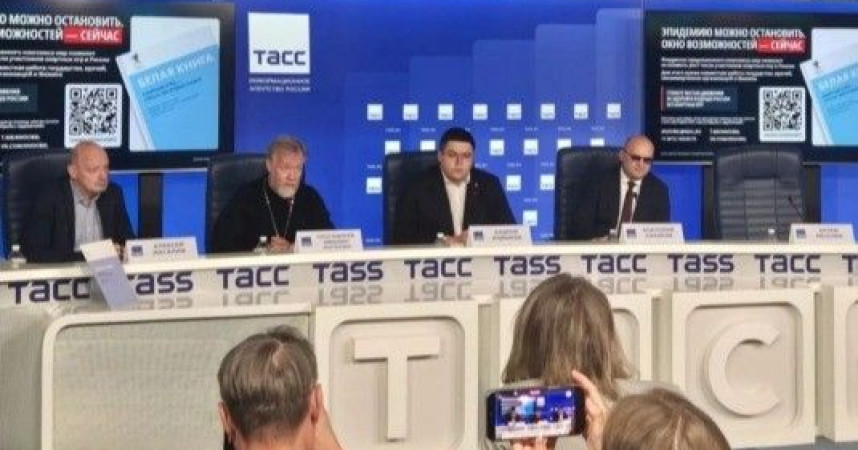
Chairman of the Synodal Department for Social Service took part in a press conference at TASS dedicated to the fight against gambling addiction
25.07.2026, 08:00


-

The Most Valuable Lesson Didn't Come from the Textbook
Tatiana Lyubomirskaya
All Authors