The Monk Michael, from the family of the Maleins, was born around 894 in the Harsian region (Cappadocia) and was baptized with the name Manuel. He was related to the Byzantine Emperor Leo VI the Wise (886-911). Since childhood, the monk was distinguished by piety and a love of science. He studied the Holy Scriptures with special attention. After receiving an excellent education, he took up a significant position at the court of Emperor Leo the Wise. But after his death, at the age of 18, Manuel went to Bithynia, to the Kiminsky monastery under the guidance of Elder John Eladit, who tonsured him into monasticism with the name Michael. Performing the most difficult obediences, despite the nobility of his family, he showed an example of great humility.
After some time, he was granted the grace of the priesthood. By studying the Holy Scriptures tirelessly, St. Michael showed how worthily the priesthood should be united with monasticism, achieved a high degree of dispassion and acquired the gift of perspicacity. He was very compassionate and humane, he could not leave without help and comfort those who were in need and sorrow, and through his fervent prayers many miracles were performed.
After many monastic labors under the guidance of Elder John, St. Michael asked for his blessing for a solitary life in a cave. Named after an Angel, Michael lived like an angel; without changing the rules of abstinence until his last breath, he constantly fasted, except when he was ill, or there was a Lord's feast, or when he received some glorious nobleman. Initially, when he became a monk, he ate once every two days, then in the middle of his ascetic life he ate only once every five days, towards the end of his life, especially on Holy Lent, he ate once every 12 days. He spent five days of the week in prayer concentration, and only on Saturday and Sunday did he go to the monastery to participate in Divine Services and receive Communion of the Holy Mysteries. The saint's clothes were poor and severe.
By the example of a high spiritual life, the holy hermit began to attract many who sought salvation. In a deserted place called a Dry Lake, St. Michael founded a monastery for the brethren who had gathered to him and gave them a strict rule. When the monastery became stronger, St. Michael went to even more remote areas and established a new monastery there. Soon, through the labors of the holy Abba, the entire Kiminsky Mountain was covered with monastic monasteries, where prayers were tirelessly offered up for the whole world to the Throne of the Most High.
Around 953, the young man Abraham joined the brotherhood, who grew up under the guidance of St. Michael and took vows from him with the name Athanasius. Subsequently, St. Athanasius (commemorated on July 5/18) He founded the famous Athos Lavra, the first cenobitic monastery on the Holy Mountain. In building the Lavra, St. Athanasius was greatly assisted by St. Michael's nephew Nikephoros, later the Byzantine Emperor Nikephoros Phokas (963-969), who, while visiting his uncle, became acquainted with him. After fifty years of tireless monastic labors, the Monk Mikhail Malein peacefully departed to the Lord in 962.
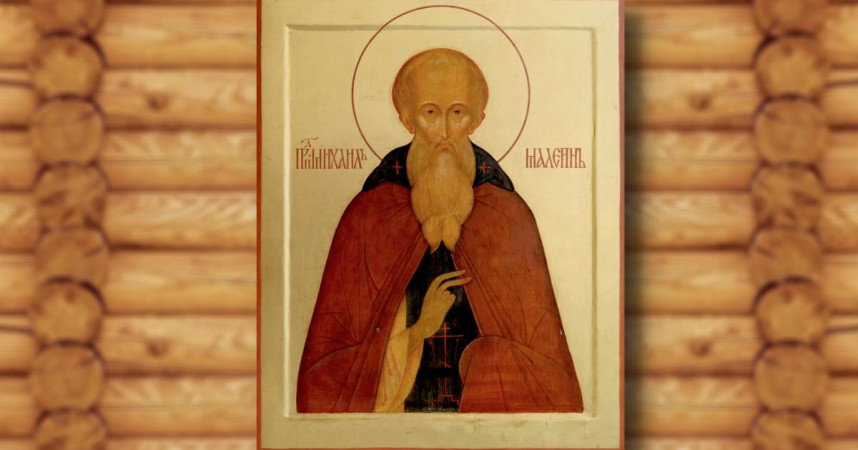
The church remembers St. Mikhail Malein.
25.07.2026, 06:00




-
Woe to You, Actors
Alexey Shirikov
All Authors