The Orthodox Church honors the memory of St. Isaac of Dalmatia, an ascetic of the fourth and fifth centuries, one of the famous defenders of the Orthodox faith during the era of the Arian controversy.
According to legend, St. Isaac came from the East, most likely from Syria. At first he struggled in the desert, but one day he heard a heavenly voice commanding him to go to Constantinople. Arriving in the imperial capital, the saint saw that Orthodox Christians were being oppressed, and Emperor Valens supported the Arian heresy.
When Valens was going to war with the barbarians, the Monk Isaac appealed to him several times to stop the persecution and open Orthodox churches. For these exhortations, the saint was beaten and imprisoned. According to the life, the emperor ordered him to be thrown into a deadly swamp, but two angels miraculously saved the ascetic. When the monk appeared to Valens for the last time, he predicted defeat and death in the fire. Soon the prophecy was fulfilled: the emperor's army was defeated, and Valens himself, fleeing, died in a burning building.
After Valens' death, power passed to Emperor Theodosius I the Great. Having learned of the prophecy of St. Isaac, he ordered the saint to be released from prison and received him with honors in the palace. The ascetic wanted to return to the desert, but the pious inhabitants of Constantinople asked him to stay in order to support the people spiritually. The saint agreed and settled in a modest cell outside the city walls.
Many people came to St. Isaac. He instructed them in the faith, prayed for them, blessed them at home and helped the poor. According to his life, if he met a beggar, he could even give him his own cloak. A monastic community gradually formed around the saint's cell. Later it became known as the Dalmatian Monastery, one of the oldest monasteries in Constantinople.
Sensing the approach of his death, St. Isaac gathered his disciples, bequeathed them to keep the Orthodox faith, and chose a disciple named Dalmatus as his successor. After the saint's death, he was buried in the church of the Holy First Martyr Stephen, not far from the monastery he founded.
The exact date of St. Isaac's death remains the subject of scholarly debate. Some sources indicate the year 383, but most researchers believe that the saint died later, after 406.
Veneration of St. Isaac is especially well known in Russia. His memorial day coincided with the birthday of Emperor Peter the Great — May 30, old style. Peter considered the saint to be his heavenly patron. That is why the famous St. Isaac's Cathedral, dedicated to St. Isaac of Dalmatia, was erected in St. Petersburg.
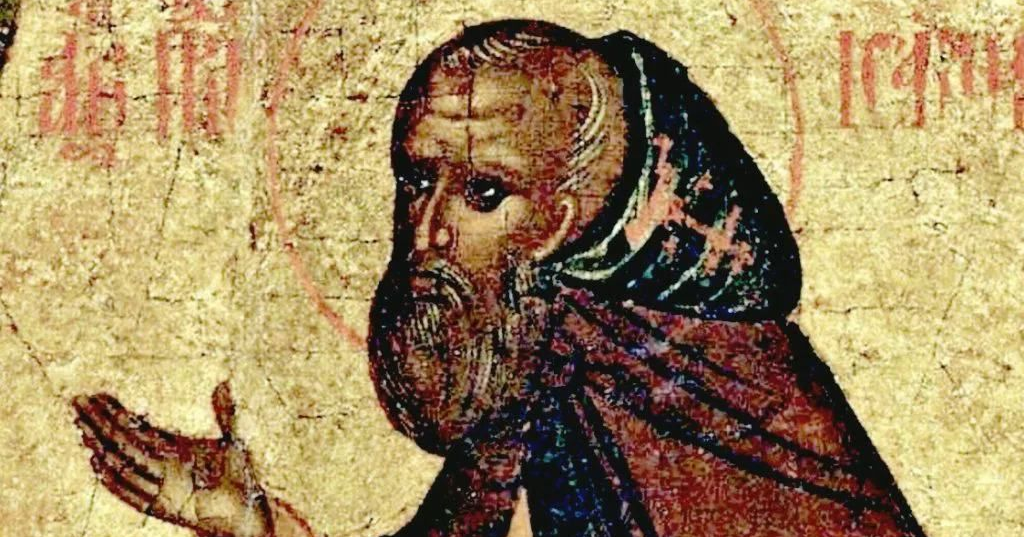
The Church commemorates St. Isaac of Dalmatia
12.06.2026, 06:00







-

“I Praise You, Brothers”: The Spiritual Art of Recognizing the Good
Alexey Shirikov
All Authors