Saint Photius, Metropolitan of Kiev and All Russia, was a Greek from the Peloponnesian city of Monemvasia (Malvasia). As a teenager, he entered the monastery and was tonsured by Elder Akaki, a great ascetic (later Metropolitan of Monemvasia). In 1408, when Photius was in Constantinople with the patriarch on a mission from the metropolitan, the question arose of replacing the Russian see after the death of St. Cyprian (+ 1406; commemorated on September 29). The choice of Patriarch Matthew (1397-1410) fell on Photius, known for his scholarship and sanctity of life. On September 1, 1408, Saint Photius was promoted to metropolitan and arrived in Russia a year later.
Russian Russian Orthodox Church spent six months in Kiev (September 1409 – February 1410), arranging the affairs of the southern dioceses of the Russian Church, which were then part of the Principality of Lithuania, or rather, as it was called, Lithuanian and Russian. The saint saw that the metropolitan's throne, the spiritual center of church life in Russia, could not be located in the Kievan land, which was increasingly dependent on Catholic Poland. Following the example of the former Russian metropolitans, who moved their headquarters first to Vladimir and then to Moscow, Metropolitan Photius arrived in Moscow on Easter Day in 1410.
For 22 years the saint labored in the arduous ministry of the primate of the Russian Church. In difficult conditions of wars, internecine warfare, and predatory raids by the Tatars, he managed to raise the spiritual significance, material security, and splendor of the churches of the Moscow Department to a high level. Russians Russian Orthodox Church's prosperity allowed St. Photius to provide great assistance to the impoverished Patriarchate of Constantinople and to strengthen the international importance of the Russian Orthodox Church and the Russian state. The enemies of Orthodoxy have repeatedly tried to obstruct the church-patriotic ministry of Photius. In the spring of 1410, when Saint Photius arrived from Moscow to Vladimir, the Khan of Edygei, who had ravaged the Russian land two years before, undertook a new campaign to capture the metropolitan himself. Tatar detachments led by Tsarevich Talycha "the outcast", that is, suddenly and quickly, took Vladimir. But God preserved the righteous man: the day before, unaware of the danger, the saint went to the suburban Svyatoozersky monastery. When the Tatars rushed in pursuit, he took refuge in a small village surrounded by impassable swamps on the Senge River. Having failed to capture the metropolitan, the embittered Tatars plundered Vladimir and especially the Assumption Cathedral. The cathedral's sacristan, Patrikey, suffered terrible tortures and was martyred by Tatar robbers, but did not reveal the place where he hid the church's shrines and treasures.
Russians Russian Church's prayerful and canonical unity was restored through the efforts of St. Metropolitan Photius: the separate Lithuanian metropolia, established at the insistence of Prince Vitovt for the southern and western Russian Orthodox dioceses, was abolished in 1420. The saint visited the returned dioceses in the same year and greeted the flock with an extensive teaching message. The wise and highly educated pastor left many teachings and messages. Of great theological importance were his denunciations of the heresy of the Strigolniki that arose in Pskov even before his reign. Through the efforts of the wise saint, heresy ceased (in 1427).
Important church historical sources are the "Rite of Election and Appointment of Bishops" compiled by Saint Photius (1423), the "Teaching on the importance of the holy office and the duties of the clergy", as well as the "Spiritual Testament", which tells about his life. The great work of the saint was also the compilation under his leadership of the All-Russian Chronicle Code (circa 1423).
On April 20, 1430, the holy archpastor was informed by an Angel of his impending death and rested peacefully in the Lord on the date indicated to him, on the feast of the Assumption of the Robe of the Virgin, July 2, 1431. His relics were found in 1471. Two saccos of St. Metropolitan Photius are kept in the Armory of the Moscow Kremlin.
The finding and transfer of the relics of Saints Cyprian, Photius and Jonah took place on May 27, 1472, during the construction of the new stone Assumption Cathedral in the Kremlin, under Metropolitan Philip (+ 1473, commemorated in the Cathedral of Moscow Saints) and Grand Duke John III (1462-1505). Separate commemorations are dedicated to the saints: Metropolitan Cyprian (+ 1406, September 16), Metropolitan Photius (+ 1431, July 15), Metropolitan Jonah (+ 1461, April 13). With the blessing of His Holiness Patriarch Kirill of Moscow and All Russia, on March 6, 2017, the names of the holy Primates of the Russian Orthodox Church, Metropolitans Cyprian and Photius, were also included in the Cathedral of the Moscow Saints.
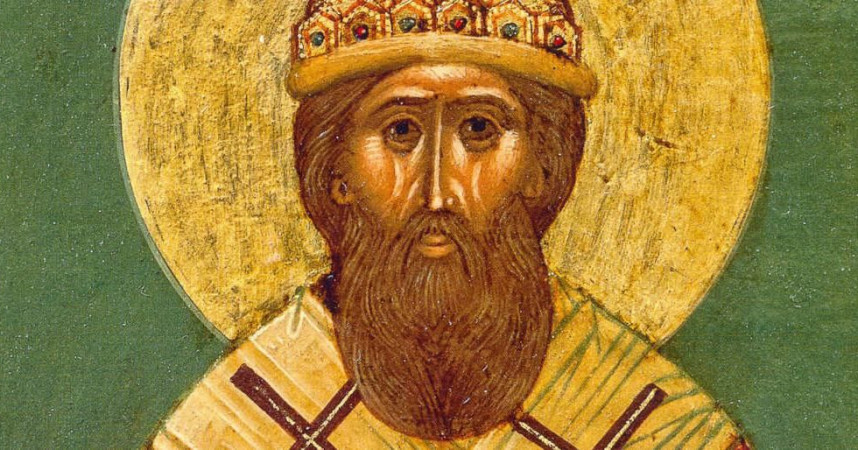
The Church remembers St. Photius, Metropolitan of Kiev and All Russia.
15.07.2026, 06:00





-

Woe to You, Actors
Alexey Shirikov
All Authors