Reverend Anatoly, in the world Alexander Potapov, aspired to monastic life from his youth, but his mother did not let him go to the monastery. It was only after her death, on February 15, 1885, that the thirty-year-old Alexander came to Optina Pustyn. Soon he was appointed cell attendant of St. Ambrose of Optina. Even then, the gifts of love, compassion, and spiritual insight manifested themselves in him.
On June 3, 1895, Alexander Potapov took monastic vows with the name Anatoly. After the death of the Venerable Joseph and Varsonofy, he, together with the Venerable Nektarios, continued the tradition of the Optina elders. If Father Nektary was more often approached by monastics and intellectuals, then Father Anatoly was mostly approached by ordinary people with their troubles, illnesses, family difficulties and everyday needs.
For his unfailing kindness and ability to support people, the elder was called "the comforter" and "the second Seraphim." He met people with a bright smile, found a few simple and wise words for everyone, and sometimes gave them a small gift. Next to him, people felt peace, hope and special spiritual joy.
Many people came to St. Anatoly every day for his blessing, confession, and unction. For their sake, he moved from the fraternal building to the vestibule of the Vladimir Church. The elder received visitors with almost no time limit, despite severe illnesses, constant fatigue and excruciating pain. He remained friendly and cordial, trying to help everyone who came to him with grief.
One day, a peasant turned to the elder, who was left homeless and almost without means with his family. Out of desperation, he wanted to drink his last money, leave his wife and children and go to work in Moscow. After listening to him, Father Anatoly blessed the visitor and said: "Don't lose heart, you will enter your house in three weeks." The prediction came true: the peasant managed to build a house and start a new life.
Reverend Anatoly deeply loved Russia and the Russian people. Anticipating the coming trials, he said that the Russian ship would be destroyed by a storm, but not all would die: the time would come when its fragments would reconnect and the ship would continue on the path God had intended for it. The elder called on his spiritual children to keep faith, not to lose courage and to patiently endure sorrows.
After the closure of Optina Hermitage, the monk's cell was searched, and the most seriously ill elder was arrested. On the way to prison, he got worse and was admitted to the hospital. There, Anatoly was mistaken for a typhus patient and his hair and beard were cut off. When the mistake was found out, the doctor released the elder. He returned to the monastery completely exhausted, but with a bright smile and gratitude to God.
On July 29, 1922, a GPU commission arrived at the monastery. They were going to arrest the elder again. He did not resist and asked only for a day to prepare. At night he became ill, and in the morning the cell attendant, Father Barnabas, saw him kneeling in front of the icons. A few minutes later, the Monk Anatoly quietly went to the Lord.
In the morning, the members of the commission asked if the elder was ready to leave. "Yes, I am ready," the cell attendant replied and led them into the cell, where the deceased ascetic lay in a coffin. St. Anatoly died on the night of July 30 (August 12), 1922.
The elder was buried next to the grave of St. Ambrose, in the very place that he himself had indicated shortly before his death as suitable for another burial.
"Put your trust in the will of the Lord, and the Lord will not put you to shame," taught St. Anatoly. He testified to the fidelity of these words with his whole life and peaceful Christian death.
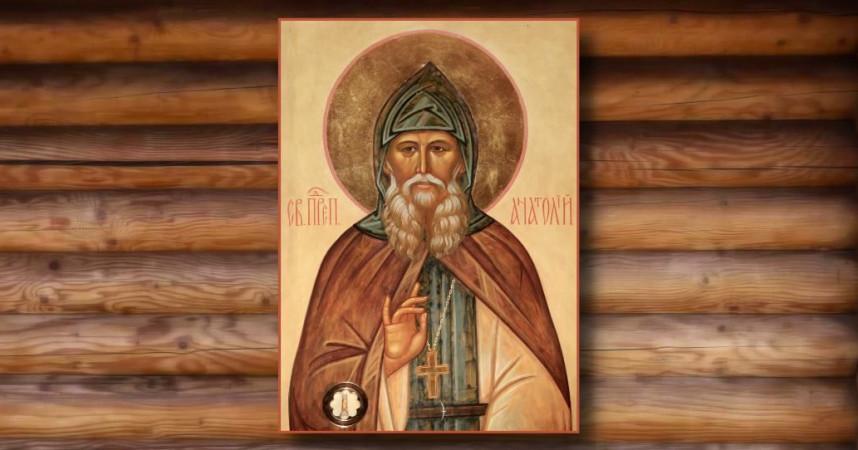
The Church remembers St. Anatoly of Optina (Potapov)
12.08.2026, 06:00


-

Invisible Wings
Yana Kapaeva
All Authors