The Holy Martyrs Manuel, Savel and Ismail, brothers, came from a noble Persian family. Their father was a pagan, their mother, a Christian, baptized the children and raised them in firm faith in Christ the Savior. Having matured, the brothers entered military service. As ambassadors of the Persian king Alamundar, they were sent to conclude a peace treaty with Emperor Julian the Apostate (361-363). Julian received them with due honor and showed them favor. But when the brothers refused to take part in the pagan sacrifice, the angry Julian, violating the law, imprisoned the peaceful envoys of a foreign country as criminals.
During the interrogation, he told them that if they despised the gods he worshipped, then neither harmony nor peace could be achieved between the countries. The holy brothers replied that they had been sent by their king on a state mission, and not to talk about the gods. Seeing the firmness of the faith of the holy brothers, the emperor ordered them to be subjected to severe torments. The holy martyrs were hung by nailing their arms and legs to a tree, nails were driven into their heads, and sharp knitting needles were driven under their fingernails and toenails. During the tortures, the holy warriors, as if not feeling the torment, praised God and prayed. Finally, the holy martyrs were beheaded with swords.
Julian ordered their bodies to be burned, but suddenly an earthquake occurred, the earth opened up and took the bodies of the holy martyrs into its bowels. Two days later, after the fervent prayer of Christians, the earth returned the bodies of the holy brothers, from whom the fragrance emanated. Many pagans who witnessed the miracle believed in Christ and were baptized. Christians honorably buried the relics of the holy martyrs brothers Manuel, Savela and Ismail. This happened in 362. Since that time, the relics of the holy Passion-bearers have become famous for their miracles.
Having learned about the murder of his ambassadors and that the law-abiding Julian was marching against him with numerous troops, King Alamundar gathered an army and stood on the border of his possessions. In a major battle, the Persians defeated the Greeks. Julian the Apostate was killed by the Holy Great Martyr Mercury (information posted on November 24).
30 years later, the pious Emperor Theodosius the Great (+ 395) built a church in Constantinople in honor of the holy martyrs, and St. Herman, Patriarch of Constantinople (May 12), while still a hieromonk, wrote a canon in memory and praise of the holy brothers.
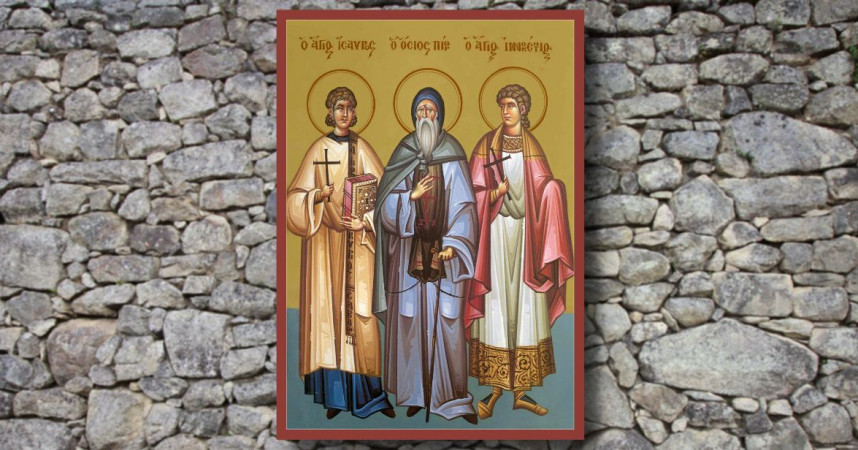
The Church remembers the martyrs Manuel, Savela and Ismail
30.06.2026, 06:00


-

The Most Valuable Lesson Didn't Come from the Textbook
Tatiana Lyubomirskaya
All Authors