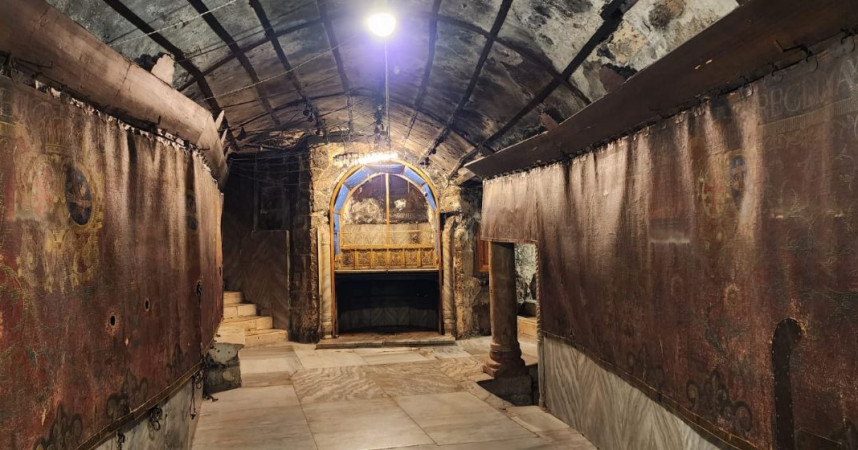
Restoration work is set to begin at the Grotto of the Nativity in Bethlehem, one of the most revered shrines in the Christian world. The announcement was made in a joint statement by the Jerusalem Patriarchate, the Custody of the Holy Land, and the Armenian Patriarchate of Jerusalem.
The project will be carried out by an Italian company that previously participated in the restoration of the Basilica of the Nativity. Church representatives said this choice will ensure continuity in restoration methods, high standards of workmanship, and a careful approach to a site of exceptional sacred importance. The preparatory phase has already been completed, and the project is now entering the active stage of work.
The restoration will cover not only the Grotto of the Nativity itself but also adjacent areas. According to the Churches, the project includes measures to strengthen the structures technically, reflecting both the architectural unity of the sanctuary and the long-standing tradition of cooperation among Christian denominations in preserving the Holy Places.
In their joint communiqué, the Churches emphasized the spiritual significance of the restoration. According to Christian belief, the Grotto of the Nativity is the place of the Incarnation of the Son of God and the earthly beginning of the Christian faith. The restoration is viewed as a contribution to preserving the continuity of faith, historical memory, and devotion in the Holy Land.
Representatives of the Jerusalem Churches stated that the joint initiative aims to safeguard the Gospel heritage and to ensure that believers of different traditions can continue to venerate the birthplace of Jesus Christ with reverence. The statement also noted that the Grotto of the Nativity remains a symbol of uninterrupted Christian presence in Bethlehem and a source of hope for the entire world.
The Grotto of the Nativity is a small cave beneath the Basilica of the Nativity in Bethlehem, venerated since the earliest centuries of Christianity as the place where Jesus Christ was born of the Virgin Mary. The shrine has been known since at least the 4th century, when a church was built above it by order of Saint Helena. In the eastern part of the grotto stands the Altar of the Nativity with a silver star marking, according to tradition, the birthplace of the Savior. Lamps belonging to the Orthodox, Armenian, and Catholic communities burn there continuously. The grotto is one of the oldest and most revered Christian holy sites and remains a daily place of worship and pilgrimage for believers from around the world.






-

The Right Moment
Alyona Bogolyubova
All Authors