On September 23-24, 2026, the XVIII International Scientific and Theological Conference "Topical Issues of Modern Theology and Church Science" was held at the St. Petersburg Theological Academy. The meeting was held in a face-to-face and remote format and brought together representatives of religious and secular educational institutions, clergy and researchers.
On behalf of Bishop Siluan of Peterhof, Rector of the Academy, Archpriest Konstantin Kostromin, Vice Rector for Scientific and Theological Work, welcomed the participants.
The plenary session heard reports on the contribution of graduates of the Academy to the spiritual education of the Orenburg diocese, the theological legacy of Protopresbyter Alexander Schmeman, the traditions of the study of the Fourth Gospel and the relationship of church law with jurisprudence and theology. A separate presentation was dedicated to the charitable works of Empress Maria Alexandrovna. The meeting ended with the presentation of new books published by the Academy.
The work of the conference continued in thematic sections. The participants discussed theology and patrology, biblical studies, church history and law, religious philosophy, missionary service, church art and music. Two sections were held at St. Petersburg State University, where the development of Russian theological thought and the transmission of traditional spiritual, moral and family values in the educational environment were discussed.
The round table dedicated to St. Leo the Great was timed to coincide with the 1575th anniversary of the Fourth Ecumenical Council of Chalcedon and the 1565th anniversary of the blessed repose of the saint. The participants addressed his dogmatic and liturgical legacy, the significance of his works for church teaching and modern interfaith dialogue.
Issues of Orthodox bioethics, Christian psychology and pedagogy occupied a significant place in the program. The moral challenges of the development of artificial intelligence and biomedical technologies, the interaction of pastoral and psychological care, family support and child rearing were discussed. Special attention was paid to the participation of children with disabilities in parish and liturgical life, the creation of an accessible environment and the work of Orthodox care centers.
At the round tables on church media and modern ecclesiological challenges, participants examined the Church's presence in the information space, the impact of digital technologies on religious content, and ways to speak about faith in a lively language understandable to modern people.
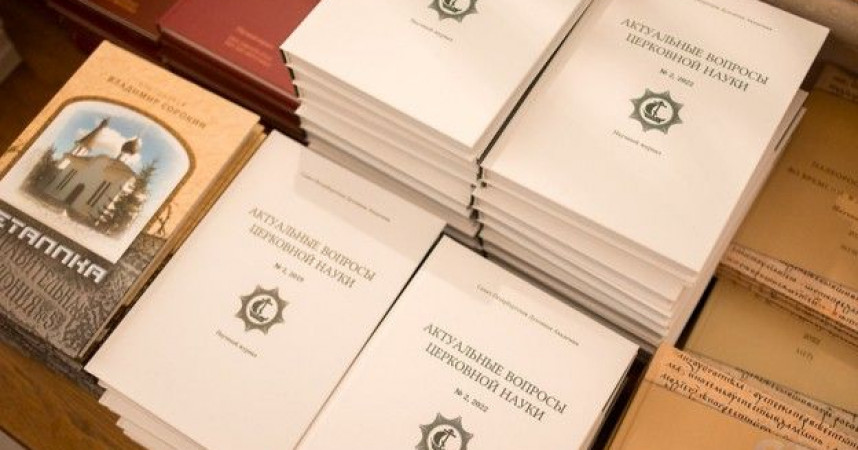
The XVIII International Scientific and Theological Conference was held in St. Petersburg
28.09.2026, 07:00




-
The Strength of Weakness
Alexey Shirikov
All Authors