New evidence about the life of the Russian Orthodox Church in the Soviet decades has appeared on the Memorial of the Church portal. The project of the Educational Committee of the Russian Orthodox Church preserves the memories of people whose destinies are connected with the history of the Orthodox faith in the 20th century.
The heroes of the new publications were Hieromonk Roman (Shubenkin), Archpriest Vasily Kornuta, Abbess Ekaterina (Gayeva), Tatiana Mikhailovna Izhogina and Maria Alexandrovna Zasypalova. Their stories allow us to see the church life of the Soviet era through personal destinies, family stories and memories of meetings with spiritual mentors.
Hieromonk Roman (Shubenkin), rector of the Radonezh monastery of the Holy Trinity Sergius Lavra, talks about his conversion to the faith, life among hermit monks in the mountains near Sukhumi, and communion with the Lavra, Glinsk, and Pskov Caves elders.
Archpriest Vasyl Kornuta recalls his childhood in the church in Transcarpathia, his desire to become a priest and the difficulties of entering a theological seminary during the years when the state authorities prevented him from receiving a spiritual education.
Abbess Ekaterina (Gayeva), abbess of the Kazan Convent in Yaroslavl, shares the story of her journey to God. Having grown up in a Soviet family, she gradually came to faith, largely thanks to the prayers and spiritual example of her loved ones.
A special place is occupied by the memories of Tatiana Mikhailovna Izhogina, who grew up in a priest's family. She talks about her father— Archpriest Mikhail Lutskevich, church singing, family traditions, and how faith and culture intertwined in everyday life.
Maria Alexandrovna Zasypalova from Mordovia has preserved memories of her relatives who, even in difficult years, remained faithful to Christian values. Her story is a testimony to kindness, hard work, mutual assistance and faith, passed down from generation to generation.
The value of the Church Memory project lies in preserving the living testimonies of the era. Through the memories of eyewitnesses, the history of the Church is revealed not only in dates and events, but also in the fates of people who managed to preserve the faith and pass it on to the next generations.
Earlier, the first collection "Memory of the Church. Conversations with witnesses of the life of the Church in the Soviet era", which brought together 13 conversations about church life from the pre-war years to the end of the Soviet period.
You can get acquainted with new materials and other evidence on the project's website — https://pamyat-tserkvi.ru /.
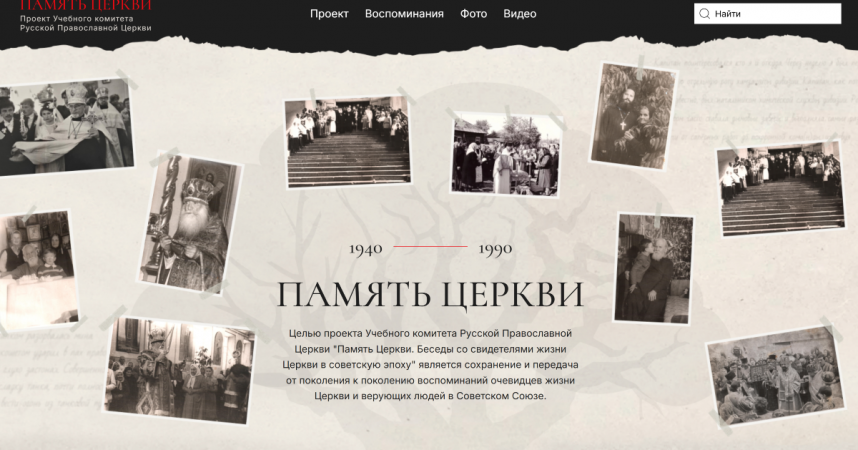
New memories about the life of believers in the Soviet era have been published on the Memory of the Church portal.
11.11.2026, 08:00






-
Too Much Freedom?
Alexey Shirikov
All Authors