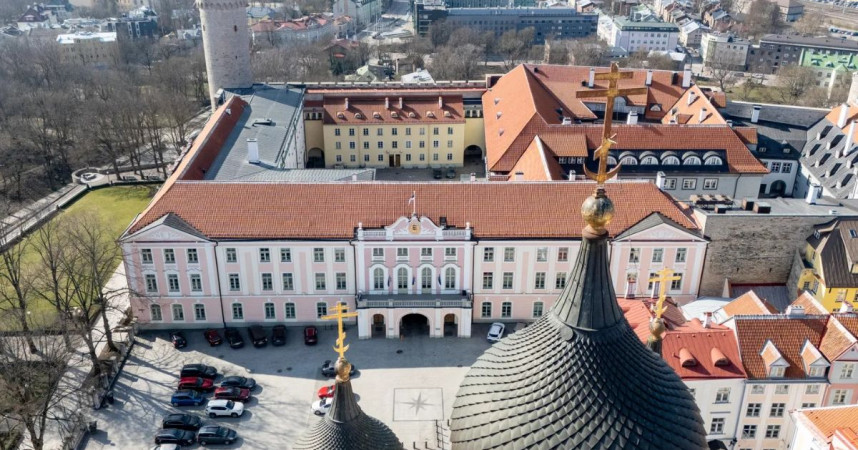
On September 16, 2025, the Estonian Parliament voted for the third time to pass the controversial Church and Congregations Law, despite objections from President Alar Karis. The vote saw 63 members in favor and 15 against, as reported by Postimees. The law will now be sent to the State Court for evaluation of its constitutionality.
The new legislation mandates that religious organizations must amend their statutes if they are subordinate to foreign centers deemed a threat to the country's sovereignty or constitutional order. Organizations will have six months to comply, and failure to do so will allow congregations to sever ties and register new statutes without the consent of their previous governing bodies. The explanatory note emphasizes that the law aims to prevent the misuse of religious freedom for the spread of extremism and hostile influence.
In practice, the law primarily targets the Estonian Orthodox Christian Church (EOC), which is affiliated with the Moscow Patriarchate. Authorities have indicated that non-compliance could lead to legal action and a potential ban on the church's activities.
President Karis criticized the legislation, stating during the opening of the autumn session of the Riigikogu on September 15 that the law should not disproportionately restrict religious freedom. He emphasized the importance of carefully assessing the goals and consequences of legislative decisions, highlighting the need to protect fundamental rights.
In May 2024, the Estonian Parliament designated the Russian Orthodox Church (ROC) as an institution supporting Russia's military operations in Ukraine. Subsequently, Lauri Läänemets, who was then the Minister of Internal Affairs, expressed hopes for a severance of ties between the Estonian Orthodox Church of the Moscow Patriarchate (now EOC) and the ROC, urging the EOC to recognize the activities of the Moscow Patriarchate as heretical. In response, Vladimir Legoyda, head of the Moscow Patriarchate's synodal department for church-society relations and media, accused the Estonian Ministry of Internal Affairs of attempting to dismantle the EOC and push its followers into the jurisdiction of the Patriarchate of Constantinople.






-

The Right Moment
Alyona Bogolyubova
All Authors