The Holy Martyr Eusebius, Bishop of Samosata, firmly stood for the Orthodox confession, approved at the First Ecumenical Council in Nicaea in 325, for which he suffered persecution from the Arians, who repeatedly deprived him of his see and banished him to prison. Emperor Constantius (337-361), the patron saint of Arians, having learned that St. Eusebius kept the council act on the election of Orthodox Archbishop Meletius to the see of Antioch, sent an order to him to issue this act. The saint resolutely refused to obey the order. The enraged emperor sent word that if he did not hand over the deed, his right arm would be cut off. Saint Eusebius stretched out both hands to the messenger with the words: "Cut it off, but I will not give back the act of the council, which exposes the malice and lawlessness of the Arians." Emperor Constantius was surprised by the bishop's boldness, but did not harm him.
After Constantius, Julian the Apostate (361-363) reigned. An even more difficult time has come – the open persecution of Christians has begun. Saint Eusebius, hiding his rank, in the garb of a soldier, traveled through Syria, Phoenicia and Palestine, confirming Christians in the Orthodox faith. He supplied priests and deacons to empty churches, ordained bishops who rejected the Arian heresy. After the death of Julian the Apostate, the pious king Jovian (363-364) reigned, during whose reign the persecution ceased. Archbishop Meletius, who had returned from exile, on the advice of Saint Eusebius, convened a Local Council in Antioch in 379. 27 bishops participated in it and the Orthodox doctrine adopted at the First Ecumenical Council was confirmed. The Arians, fearing the firm confessors of Orthodoxy – Saints Meletius, Eusebius and Pelagius, who were highly respected by the emperor, put their signatures under the conciliar definition. After the death of Emperor Jovian, the reign of the Arian Valens (364-378) began. The Orthodox began to be persecuted again. Saint Meletius was exiled to Armenia, Saint Pelagius to Arabia, and Saint Eusebius was imprisoned in Thrace. Having received the royal decree, Saint Eusebius left Samosata at night to prevent the outrage of the people who revered him. Upon learning of the bishop's departure, the faithful overtook him and wept and begged him to return. The saint refused to comply with the request of his flock, saying that one should obey the existing authorities. The saint urged his flock to adhere firmly to Orthodoxy, blessed them and went to the place of exile. Eunomius, an Arian, was sent to the see of Samosata, but the people did not accept the heretic. The Orthodox did not go to the temple and avoided meeting him. The heretic Arian realized that he would not be able to attract an independent flock.
Emperor Gratian, who ascended the throne (375-383), returned from exile all the Orthodox bishops who had suffered under the Arians. Saint Eusebius also returned to Samosaty and continued his work on church improvement. Together with Saint Meletius, they supplied Orthodox bishops and clergymen in place of Arians. Around 380, he arrived in the Arian city of Dolikhiny to install an Orthodox bishop Marin in it. An Arianist woman threw tiles from the roof, which pierced the saint's head. When he died, following the example of the Savior, he forgave her guilt and asked those around him not to harm her. The body of Saint Eusebius was transferred to Samosaty and buried with tears by his flock. His nephew, Blessed Antiochus, was elevated to the place of the saint, and the Samosati Church continued to firmly profess the Orthodox faith, firmly planted by the labors of the holy Hieromartyr Eusebius.
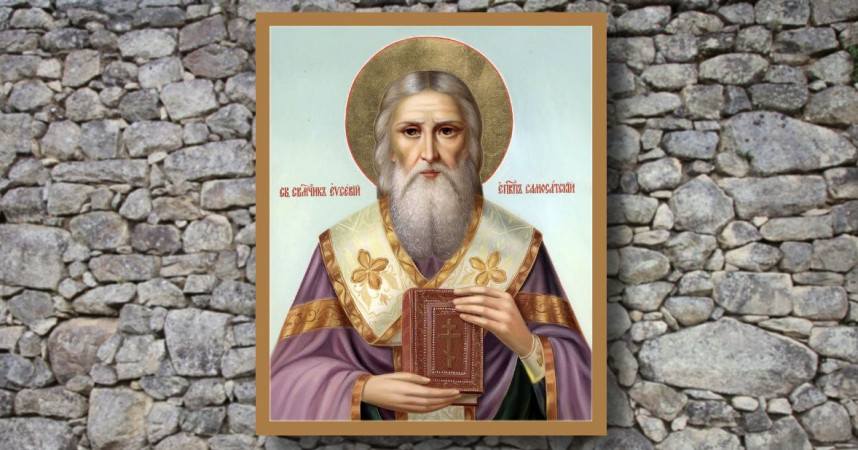
The Church remembers the Holy Martyr Eusebius of Samosata
05.07.2026, 06:00


-

What Should We Remember?
Olga Kutanina
All Authors