St. Mitrofan, the first bishop of Voronezh, was born on November 6, 1623 in Vladimir land, presumably in the family of a priest. In the world, he was named Mikhail. The future saint was married, had a son, Ivan, and served as a priest in the village of Sidorovsky in the Suzdal diocese. Widowed in his fortieth year, he decided to devote himself entirely to God and took monastic vows with the name Mitrofan at the Zolotnikovsky Assumption Monastery near Suzdal.
The monk's strict ascetic life and deep humility soon became known outside the monastery. Three years later, Mitrofan was elected abbot of the Yakhromsky Kosmina monastery. For ten years, he carefully managed the brethren, combining the demands of monastic life with paternal condescension. In 1675, Patriarch Joachim elevated him to the rank of archimandrite and appointed him rector of the Unzhensky Monastery in Kostroma land. Under his rule, the monastery achieved prosperity, the Annunciation Church, the refectory and the bell tower were built.
In 1682, the Voronezh Diocese was established, and Archimandrite Mitrofan became its first bishop. The saint had a lot of work to do at the new pulpit. He took care of the enlightenment of the people, the strengthening of church life and the worthy service of the clergy. According to him, a pastor should influence people "with the word of teaching, prayer with the help of the Holy Mysteries and the example of life."
During the twenty years of St. Mitrofan's ministry, the number of churches in the Voronezh Diocese increased from 182 to 239, and two monasteries were founded. In Voronezh, under his care, the stone Annunciation Cathedral was erected. At the same time, the archpastor himself lived extremely modestly. He helped the poor, widows, and orphans, protected the wronged, received strangers, and cared for the sick. A special place in his prayers was occupied by the soldiers who fell for the Fatherland.
An important page in the life of the saint was his relationship with Peter I. The bishop supported transformations beneficial to the country, approved the construction of the Russian fleet in Voronezh and provided financial assistance to it. At the same time, he was not afraid to object to the tsar if he saw a threat to the Orthodox faith. One day, the saint refused to enter Peter's palace, decorated with pagan antique statues. The angry tsar threatened him with death, but the bishop began to prepare for it, preferring to die rather than compromise his beliefs. The saint's steadfastness made a strong impression on Peter: the statues were removed, and reconciliation took place.
Saint Mitrofan was well acquainted with the Holy Scriptures and the works of the holy Fathers. In his spiritual testament, he left a brief rule of Christian life: "Use labor, keep moderation — you will be rich; drink abstinently, eat little — you will be healthy; do good, avoid evil — you will be saved."
Saint Mitrofan reposed to the Lord on November 23, 1703, shortly before his death, having accepted the schema with the name Macarius. Peter the Great deeply grieved over the death of the "holy elder" whom he revered and helped carry his coffin himself. The saint was buried in the Annunciation Cathedral in Voronezh.
The veneration of the first Voronezh bishop began immediately after his death. Numerous healings were performed at his tomb, and the incorruption of the relics was witnessed during the transfer of the remains. In 1832, St. Mitrofan was canonized. The Russian Orthodox Church commemorates him twice a year: on November 23, on the day of his repose, and on August 7, on the day of his glorification.
Saint Mitrofan remained in the church's memory as a wise archpastor, a merciful intercessor for the suffering, an active creator and a courageous confessor who managed to combine service to God with concern for his people and Fatherland.
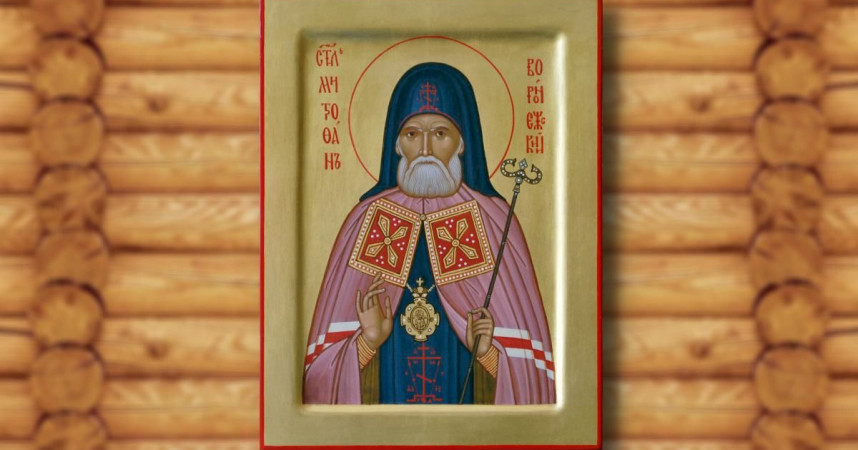
The Church remembers St. Mitrofan, Bishop of Voronezh
20.08.2026, 06:00


-
The Prayers We Say for the Dead Are Also Prayers for the Living
Tatiana Lyubomirskaya
All Authors