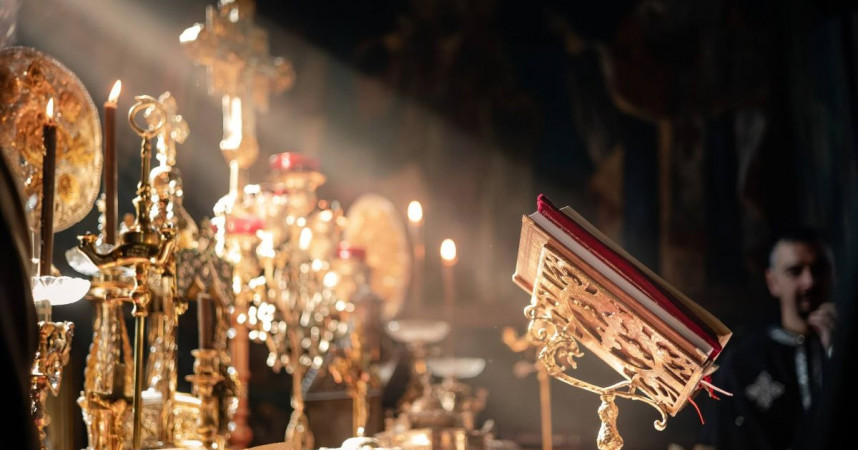
The Debar–Kičevo Diocese of the Macedonian Orthodox Church has called on the faithful to support organ donation, urging people to view it as an expression of love and solidarity. The appeal was published on August 13, a date observed in many countries as a day dedicated to raising awareness of organ donation and transplantation. The statement was reported by the Macedonian Church news portal liturgija.mk.
In its message, the diocese said organ donation reflects care for a neighbor’s life. Even in the most difficult circumstances, it argued, a person can offer hope to someone else and help them receive a chance to live.
“As Christians, we are called to cultivate a culture of mercy and selfless giving,” the diocese wrote, citing a Gospel passage from the Gospel of John: “There is no greater love than that someone lay down his life for his friends.”
The diocese’s position aligns with approaches previously outlined by other Orthodox churches.
The Russian Orthodox Church, for its part, treats transplantation as a medical practice that can save the life of a seriously ill patient. At the same time, in its “Foundations of the Social Concept,” the church stresses that organs cannot be treated as commodities. It also holds that donation from a living person is permissible only with voluntary consent and provided that the procedure does not endanger the donor’s life.
The Russian Orthodox Church also emphasizes that the moment of death must be determined precisely before organs are taken from a deceased person. It considers prior voluntary consent for posthumous donation to be a moral requirement for such a procedure.
A similar stance has been taken by the Serbian Orthodox Church. In 2024, it issued a specific statement clarifying that it does not oppose transplantation, pointing to a decision by its Assembly of Bishops that permits organ transplants when voluntary consent and required medical and ethical conditions are observed.
Taken together, the churches do not view organ donation itself as incompatible with Christianity. Instead, they argue that a voluntary willingness to give part of oneself to save another can be understood as mercy and sacrificial love—while insisting on protecting human dignity, preserving the donor’s freedom of choice, and rejecting any commercialization of transplantation.


-

Invisible Wings
Yana Kapaeva
All Authors