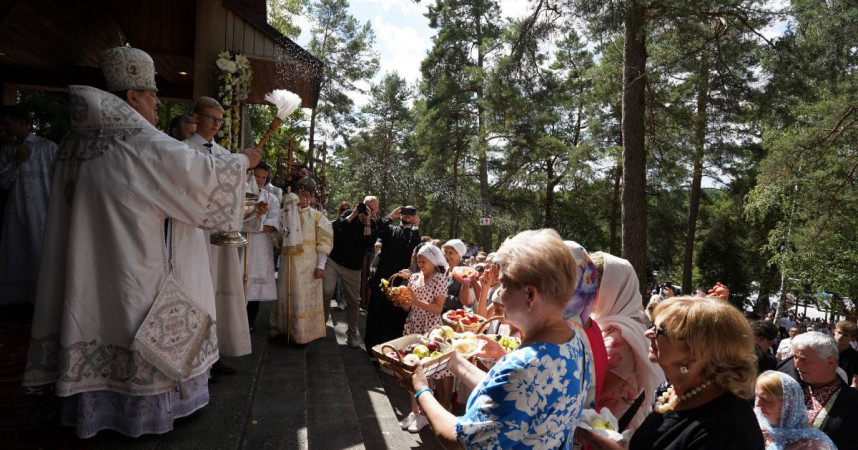
Tens of thousands of Orthodox pilgrims from Poland and abroad gathered on August 18 at the Monastery of Saints Martha and Mary on Grabarka Hill to celebrate the Feast of the Transfiguration of the Lord.
This year’s celebrations also commemorated the 1,700th anniversary of the discovery of the Cross of the Lord by Saint Helena, Equal-to-the-Apostles, according to the Polish Orthodox Church.
Pilgrims began arriving at Grabarka on August 17. Many traveled on foot from Warsaw, Bielsko Podlaskie, Sokółka, Hajnówka, and other cities, while others arrived by bus or bicycle. A pilgrimage group also came from an Orthodox parish in Brussels.
The central Divine Liturgy was celebrated by Archbishop Abel of Lublin and Chełm, who was joined by other bishops and clergy. Services continued throughout the night and into the morning. After the liturgy, a procession was held around the church, during which fruits brought by the faithful were blessed.
A distinctive feature of the pilgrimage to Grabarka is the tradition of bringing wooden crosses to the holy site. Pilgrims place them on the hill beside the church, creating what is popularly known as the “forest of crosses.” Many worshippers climb the steps from the nearby spring and then circle the church on their knees.
This year’s observances carried additional significance because of the anniversary marking 1,700 years since the discovery of the Cross on which, according to Christian tradition, Jesus Christ was crucified. The event is traditionally dated to 326 and associated with Saint Helena.
In a message to the faithful, Metropolitan Sawa of Warsaw and All Poland recalled the history of the Cross and called on believers to pray for peace, justice, and the well-being of the Church and the country.
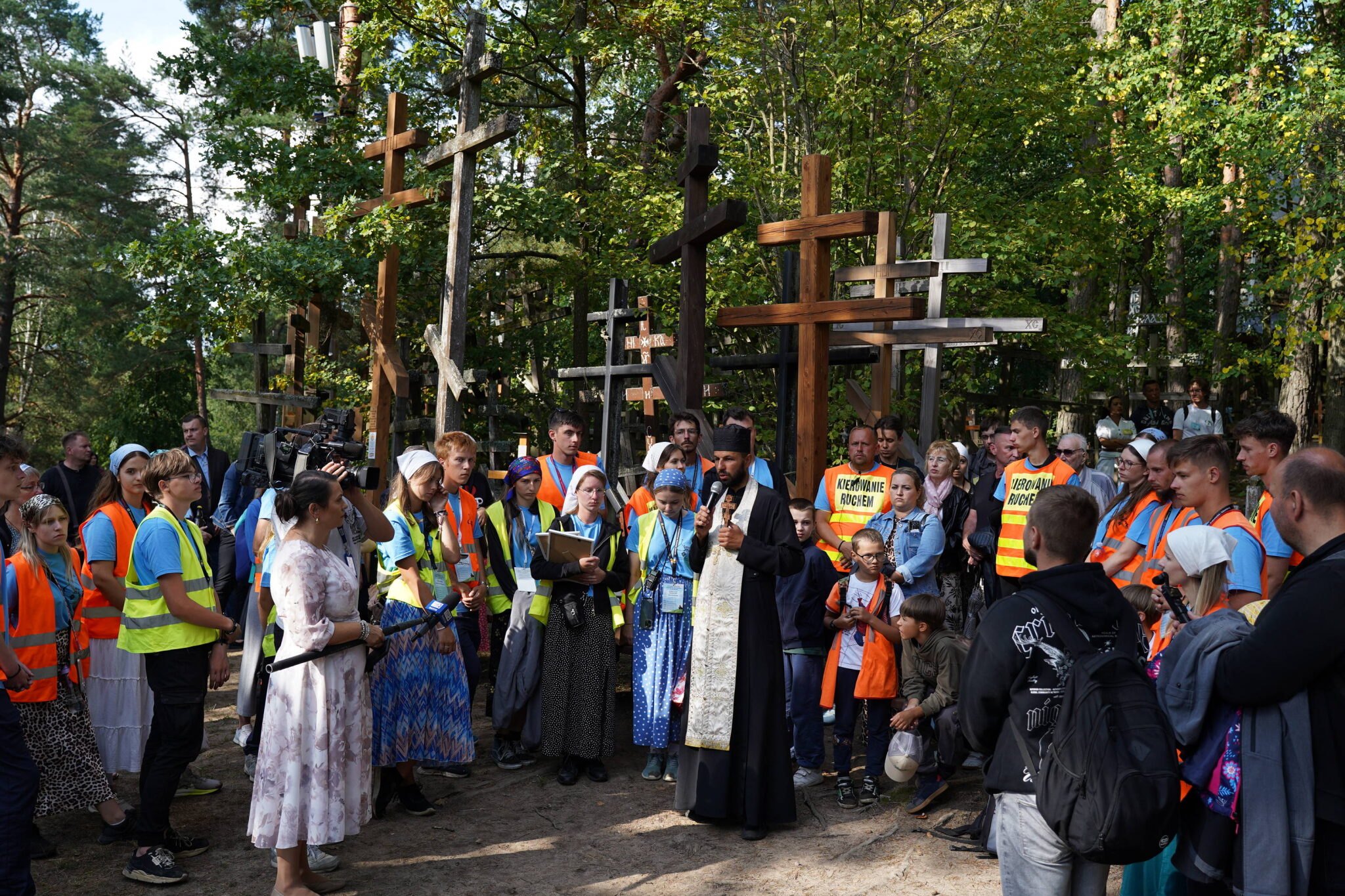
Priest Adam Magruk told worshippers that the Transfiguration and the Cross are closely connected in Christian tradition. The light revealed to the apostles on Mount Tabor is understood as a foreshadowing of the Resurrection, while the Cross symbolizes victory over death.
The tradition of erecting crosses on Grabarka Hill is linked to an 18th-century cholera epidemic. According to tradition, in 1710 local residents fleeing the disease came to the hill carrying crosses and prayed for deliverance from the epidemic. Grabarka subsequently became a pilgrimage destination, and the custom of bringing and installing crosses has continued to the present day.


-

The Prayers We Say for the Dead Are Also Prayers for the Living
Tatiana Lyubomirskaya
All Authors