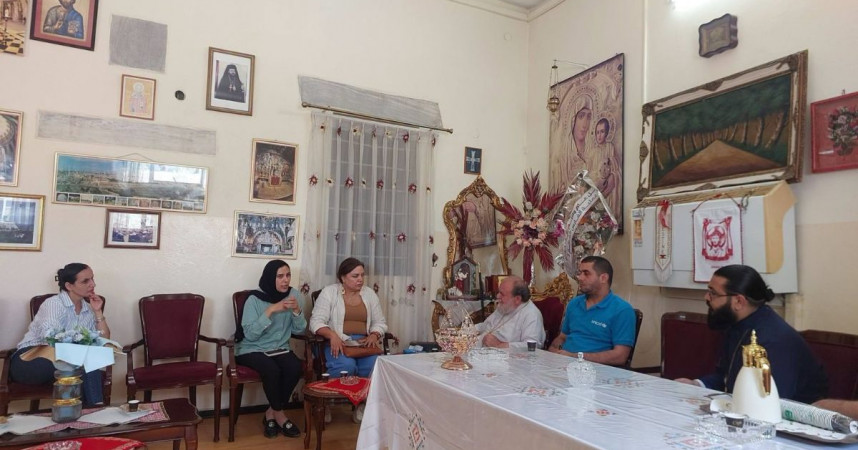
Representatives of the United Nations Children’s Fund (UNICEF) visited the Orthodox Monastery of Saint Porphyrius in Gaza to discuss the humanitarian situation and possible cooperation with local religious and community organizations.
The delegation was received by Archbishop Alexios of Tiberias, according to the Orthodoxia News Agency. The discussions focused on conditions on the ground and potential coordination of humanitarian assistance amid the continuing crisis affecting Gaza’s civilian population, particularly children.
During the conflict, the Monastery of Saint Porphyrius provided shelter to approximately 300 people, including Orthodox Christians and members of other religious communities. The monastery offered accommodation, food, and essential assistance. Despite years of war, it has continued its religious and charitable work.
UNICEF reported in early August that at least 300 children had been killed in Gaza during the 300 days following the announcement of a ceasefire in October 2025—an average of one child per day. Hundreds more children were wounded, many of them seriously.
“A ceasefire in which an average of one child is killed every day is not protecting children,” said Edouard Beigbeder, UNICEF’s regional director for the Middle East and North Africa.
Children’s welfare has been affected not only by the immediate threat of shelling. According to UNICEF, approximately 1.9 million of Gaza’s 2.1 million residents remain displaced. Restrictions on supplies and extensive damage to infrastructure continue to limit access to healthcare, clean water, sanitation, and other essential services.
By the summer of 2026, the humanitarian situation had improved somewhat compared with the most severe periods of the war, but remained extremely fragile. United Nations assessments indicated that more than 1.2 million people—59 percent of the population—faced crisis-level or worse food insecurity from mid-April through late June. The situation was projected to deteriorate between July and December, when the number could rise to 1.4 million people, or 67 percent of the population.
Water shortages remain among the most urgent challenges. UN data from early July indicated that 90 percent of Gaza’s population faced moderate or severe shortages of safe water, while approximately 75 percent continued to rely on drinking-water deliveries by tanker.
The healthcare system also remains under severe pressure. Hospitals are operating amid shortages of medicines, equipment, and medical supplies, while fuel disruptions and damaged infrastructure are hindering medical and municipal services. The World Health Organization recorded 98 incidents affecting healthcare in Gaza between January and July 2026.
The nutritional situation among children remains vulnerable as well. Although levels of acute malnutrition have declined following the expansion of humanitarian programs, specialists continue to warn of chronic malnutrition, poor diet quality, and high rates of illness among children. UN estimates suggest that approximately 74,200 children between six months and five years of age may require treatment for malnutrition through April 2027.


-

The Prayers We Say for the Dead Are Also Prayers for the Living
Tatiana Lyubomirskaya
All Authors