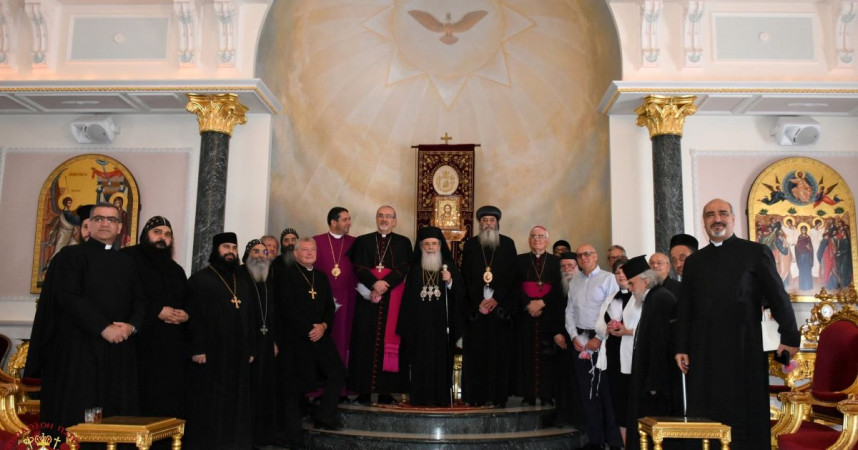
Patriarchs and heads of Christian churches in Jerusalem have called on believers and the international community to pray and work for a genuine and just peace in the Holy Land, warning that violence and human suffering continue despite a declared ceasefire.
In a joint Christmas message published on the website of the Jerusalem Patriarchate, the church leaders said that the region remains gripped by bloodshed and instability, with civilians still being killed, wounded, and deprived of security and freedom. They stressed that the reality on the ground contradicts declarations of peace.
The message recalls that the celebration of Christmas, marking the birth of Jesus Christ in Bethlehem, remains a source of hope for Christians even amid war, suffering, and uncertainty. The authors noted that Christianity itself emerged during a time of profound trials and calls believers not to give in to fear or despair.
While acknowledging that the ceasefire this year allowed some communities to mark Christmas more openly, the church leaders emphasized that violence has not ended. According to the statement, people continue to face attacks and loss of life not only in Jerusalem and the Holy Land, but also in neighboring countries.
“We cannot be satisfied with words about peace when real peace is absent,” the statement said. The church leaders expressed solidarity with all those affected by the conflict and urged Christians and people of goodwill around the world to unite in prayer and public efforts to bring an end to the violence.
The message also highlights the example of Christ, who, according to Christian belief, shared in human suffering and willingly accepted death. This example, the leaders said, continues to provide spiritual strength and hope for believers facing hardship today.
Joint Christmas messages are traditionally signed by the heads of Jerusalem’s Christian communities, including Greek Orthodox Patriarch Theophilos III of Jerusalem, the Armenian and Latin patriarchs, and representatives of the Coptic, Syriac, and Ethiopian churches. Together, these churches are responsible for the guardianship and liturgical life of Christianity’s most sacred sites, foremost among them the Church of the Holy Sepulchre.





-

The Power of Books
Alyona Bogolyubova
All Authors