The Holy Synod of the Bulgarian Orthodox Church has backed the introduction of a compulsory school subject called “Virtues and Religions,” proposing that it be introduced from the 2027/2028 academic year and gradually extended to all grades from first through 12th.
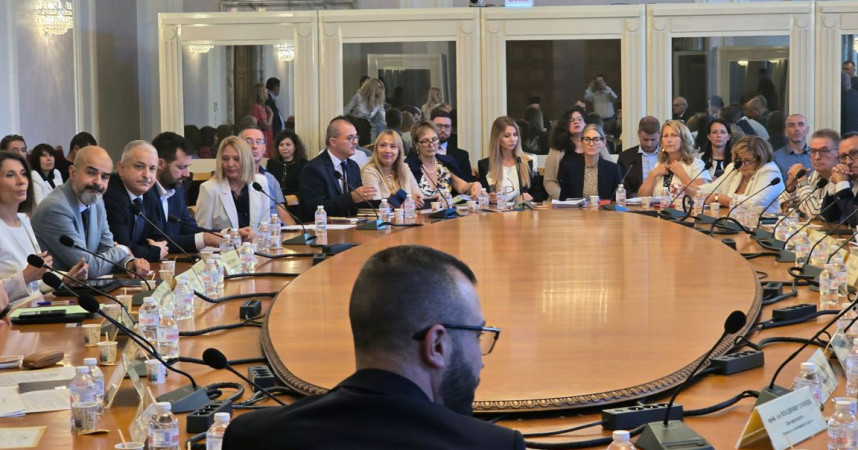
The proposal was discussed at a meeting of the parliamentary Education Committee, where lawmakers considered several bills concerning reforms to the country’s school education system. No final decision has been made, and the debate is expected to continue at the committee’s next meeting, according to the Bulgarian News Agency (BTA).
The Holy Synod has not only reaffirmed its support for making religious education part of the compulsory curriculum but has also put forward specific proposals on how the subject should be organized.
Under the proposal, students would be able to choose among three educational tracks: “Religion — Orthodoxy,” “Religion — Islam,” or a non-confessional program focused on ethics and civic education. The choice would be made by students and their parents.
The Church also proposes allowing individual instruction in cases where a school does not have enough students to form a group. The subject would be graded in the same way as other school subjects and would be taught for at least one class period per week.
A key demand from the Holy Synod is that the law establish a requirement for confessional curricula to be coordinated with the respective religious denomination. Orthodox curricula, for example, would be submitted to the competent bodies of the Bulgarian Orthodox Church for review.
The Church also proposes that teachers delivering confessional programs receive a recommendation from the diocesan or regional religious authorities of the respective denomination.
Presenting the Holy Synod’s position, its chief secretary, Bishop Gerasim of Melnik, said the Orthodox Church had consistently supported the inclusion of religious education in the compulsory part of the school curriculum.
“The aim of the subject is not indoctrination or interference in a child’s inner world, but the acquisition of basic religious literacy and systematic knowledge,” Bishop Gerasim said.
According to the Synod’s proposal, “Virtues and Religions” could initially be introduced for first-grade students in the 2027/2028 school year. It would then be gradually expanded to subsequent grades, eventually covering students through the 12th grade.
The proposal must still go through the parliamentary legislative process. Lawmakers on the Education Committee did not reach a first vote during the latest meeting, meaning the discussion will continue.
The Holy Synod says the initiative is the result of more than three decades of discussions about the role of religious education in Bulgarian schools. During that period, religion was taught in various forms, including as a compulsory or elective subject.
The issue has also been debated in parliament for several years. In 2025, discussions over whether religious education should become part of the compulsory curriculum prompted strong differences of opinion, with some civil society organizations and lawmakers opposing the inclusion of religious instruction in compulsory education.
The issue has now returned for consideration under the country’s new parliamentary term.





-

The Strength of Weakness
Alexey Shirikov
All Authors