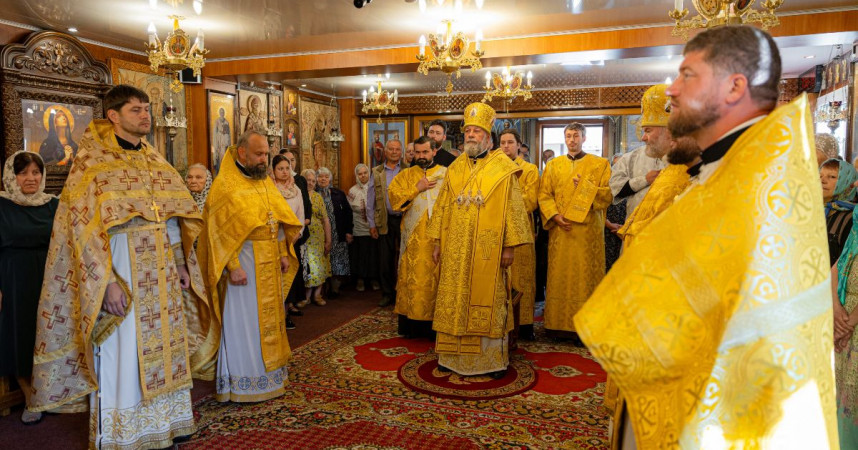
The Orthodox Church of Moldova has accused unidentified actors of conducting a deliberate campaign to undermine the reputation of Metropolitan Vladimir of Chișinău and All Moldova and the Moldovan Metropolis itself.
In a statement released by the Church’s Synodal Department for Public Relations, church officials said that a series of recent media publications appeared aimed at damaging the image of the head of the Moldovan Metropolis and the Orthodox clergy more broadly.
“We have serious grounds to believe that this media attack is the first step in a large-scale scenario designed to defame the Moldovan Metropolis and the person of Metropolitan Vladimir,” the statement said.
Church representatives described the developments as part of a coordinated effort and called on journalists, public figures, and politicians to uphold principles of responsibility and mutual respect in public discourse. The statement also emphasized the Church’s role as one of Moldova’s most influential social institutions, providing spiritual guidance and support to believers throughout the country.
According to the Metropolis, attempts to weaken the authority of religious institutions could have consequences not only for church life but also for broader social stability.
The Moldovan Metropolis is the largest Orthodox jurisdiction in Moldova and operates as a self-governing church within the Moscow Patriarchate of the Russian Orthodox Church. It has been led by Metropolitan Vladimir since the late 1980s.
The controversy comes amid longstanding competition between Moldova’s two principal Orthodox jurisdictions. Alongside the Moldovan Metropolis, which is linked to the Moscow Patriarchate, the country is home to the Metropolis of Bessarabia, a jurisdiction of the Romanian Orthodox Church.
The parallel existence of the two church structures dates back to the collapse of the Soviet Union. While the Moldovan Metropolis continued its activities within the Russian Orthodox Church, the Metropolis of Bessarabia was reestablished in the early 1990s with ties to Bucharest. Following years of legal disputes, Moldovan authorities officially registered the Bessarabian jurisdiction in 2001 after a ruling by the European Court of Human Rights.
Relations between the two metropolises have frequently been the subject of public and political debate, particularly amid broader geopolitical tensions affecting the region.
Some observers have linked the current controversy surrounding the Moldovan Metropolis to a recent scandal involving the Metropolis of Bessarabia. In May, Metropolitan Petru Păduraru resigned after intimate videos allegedly involving him circulated online, although the authenticity of the recordings was never officially confirmed. The case attracted significant public attention and widespread discussion in Moldovan media and social networks.
The Holy Synod of the Romanian Orthodox Church subsequently approved his resignation, but no date has yet been announced for the election of a successor.
Officials of the Metropolis of Bessarabia have previously stated that they reject and distance themselves from any actions that violate church norms, regardless of who may be involved. Against this backdrop, leaders of the Moldovan Metropolis have urged society to avoid hate-filled rhetoric and to refrain from transferring political and ideological conflicts into the religious sphere.





-

Woe to You, Actors
Alexey Shirikov
All Authors