Representatives of the Lithuanian Orthodox Church have urged the country's parliament not to approve proposed legislative amendments that could change the Church's legal status and facilitate the transfer of several historic Orthodox churches to the Ecumenical Patriarchate of Constantinople. The Seimas is scheduled to consider the proposals on November 18.
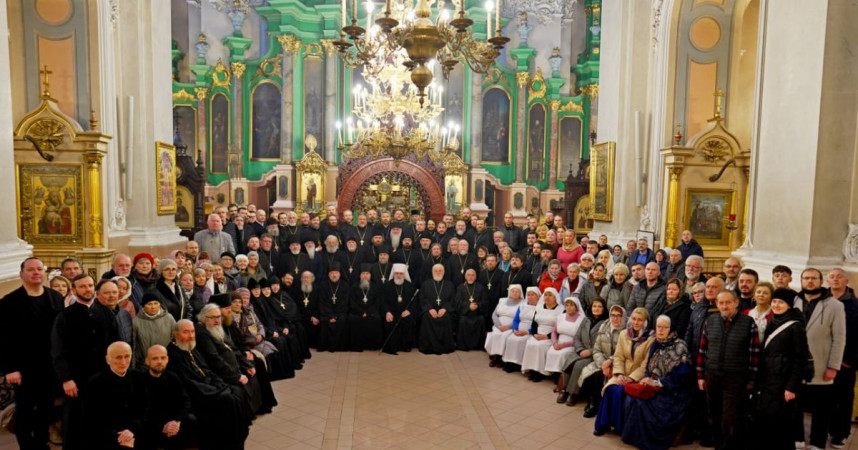
An extraordinary assembly of clergy, monastics and laypeople was held at the Holy Spirit Monastery in Vilnius ahead of the parliamentary debate. Participants unanimously adopted an appeal to the leadership of the Seimas, with one abstention. The document was signed by 148 representatives of the Church.
The statement emphasizes that Orthodox Christianity has been present in Lithuania for more than 700 years and argues that the community's historic status should not be reconsidered for political reasons.
"The right to choose one's church affiliation belongs to the faithful themselves. We are categorically opposed to changing our church jurisdiction and have no intention of joining the Patriarchate of Constantinople," the appeal states.
The authors also opposed the transfer of Orthodox churches to other religious organizations without the consent of their owners and congregations. They called on lawmakers to assess the proposed legislation for compliance with the Lithuanian Constitution and the European Convention on Human Rights.
The appeal was prompted by two bills registered on October 16 by lawmakers Audronius Ažubalis and Arvydas Anušauskas, members of the conservative Homeland Union–Lithuanian Christian Democrats party.
The proposed amendments would remove the Lithuanian Orthodox Church from the list of traditional religious communities and establish legal grounds for transferring several historic religious sites to the Ecumenical Patriarchate of Constantinople.
The sites mentioned include the Holy Spirit Monastery, the Cathedral of the Dormition of the Theotokos (Prechistensky Cathedral) and several other churches in Vilnius, as well as the Church of the Dormition in Vievis.
Earlier, Metropolitan Innokenty of Vilnius and Lithuania appealed to the country's leadership, expressing concern that the proposed measures could restrict the rights of Orthodox Christians.
The Church maintains that national security concerns should be addressed on the basis of specific evidence rather than an individual's religious affiliation.








-

The Art of Noticing Another Person’s Pain
Anastasia Ivanova
All Authors