St. Theodore the Studite went down in the history of the Church as a courageous defender of the Orthodox faith, a wise mentor of monastics and an outstanding church writer. His life was filled with hardships, trials, and persecutions, but no amount of suffering could shake his faithfulness to Christ.
The future saint was born in 758 in Constantinople into a pious family. He received an excellent education, studied the Holy Scriptures deeply, and already in his youth showed aptitude for theology. However, worldly life did not attract Theodore. Striving to devote himself to God, he became a monk at the Sakudion monastery, founded by his uncle, St. Plato, near Mount Olympus in Bithynia.
Over time, Theodore became the abbot of the monastery. He was distinguished by his strictness towards himself, his concern for his brethren, and his firmness in observing church regulations. This hardness has caused severe trials more than once. In 796, for openly denouncing violations of church rules by Emperor Constantine VI, the monk was tortured and sent into exile to Solun.
After returning from imprisonment under Empress Irina, Theodore was assigned to head the deserted Studian Monastery in Constantinople. Under his leadership, the monastery experienced a real heyday. The number of inhabitants reached a thousand people, and the monastery itself became one of the most important centers of the spiritual life of Byzantium.
For the monastic brotherhood, the monk drew up a statute defining the order of prayer, work and daily life. This charter, called the Studium, had a huge impact on Orthodox monasticism. In the 11th century, he was adopted by St. Theodosius of the Caves, and subsequently the Studian tradition spread to Russian monasteries.
The struggle against iconoclasm occupied a special place in the saint's life. When the imperial government again began to persecute the worshippers of holy icons, Theodore openly defended Orthodox teaching. For his intransigence, he was repeatedly imprisoned, exiled and ill-treated. But even in prison, he continued to strengthen the faithful with his messages and instructions.
The monk left a rich spiritual legacy: theological writings, homilies, praiseworthy words on the feasts of the Lord and the Mother of God, church hymns and canons.
The saint spent the last years of his life in Bithynia. Despite his serious illness and suffering, he continued to celebrate the Divine Liturgy daily and to instruct the brethren. In 826, the Monk Theodore peacefully departed to the Lord.
Church tradition tells us that at the hour of his death, St. Hilarion of Dalmatia had a miraculous vision. He saw a heavenly light, heard angelic singing, and a voice that announced: "It is the soul of St. Theodore, who suffered even to the point of blood for the holy icons, that departs to the Lord."
In 845, the relics of the monk were solemnly transferred to the Studi monastery. Together with him, the Church glorifies his brother, St. Joseph, Bishop of Thessalonica, who also suffered from the iconoclasts.
According to church tradition, the Lord glorified Theodore the Studite with the gift of miracles. Through the prayers of the saint, people were cured of diseases, got rid of fires and other dangers.
The life of St. Theodore the Studite reminds us of the power of faith, which helps a person to maintain courage in the face of trials. His spiritual legacy still serves as a source of wisdom for monastics and laity, and the example of faithfulness to Christ inspires new generations of Orthodox Christians.
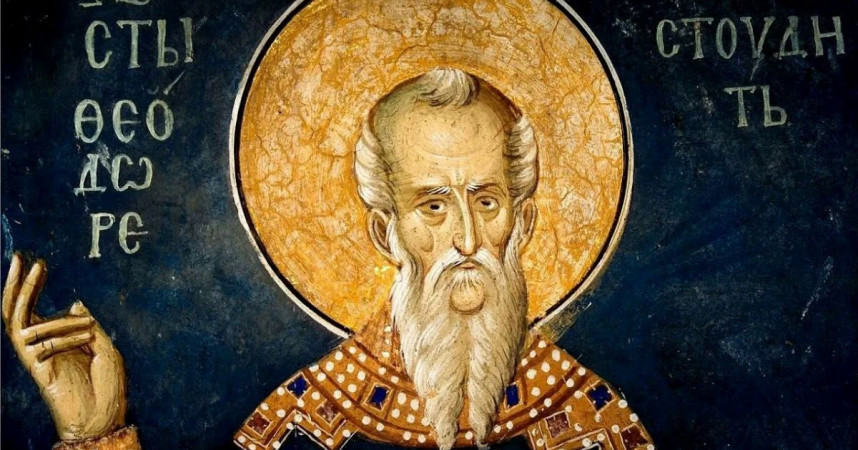
St. Theodore the Studite: A Life dedicated to the Defense of the Orthodox Faith
24.11.2026, 06:00










-
The True Meaning of a Miracle
Anton Atroshenko
All Authors