
“At the end of the day, even where I and they disagree, I admire the courage that it takes to stand up to the country's most powerful and nefarious forces and boldly, unapologetically stand firm on biblical morality.”
-Brother Augustine on Andrew Torba and Andrew Isgur.
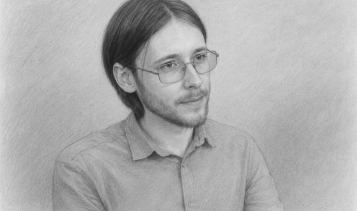
From being raised in a secular nonpracticing Jewish home, to dabbling at various times in atheism, occultism, Freemasonry, and Protestantism, Michael Witcoff finally converted to the Orthodox Church and hasn't looked back. Nowadays he is a well-known writer, podcaster, and YouTuber under the name of Brother Augustine. His bestselling book On the Masons and Their Lies details the reasons for his departure from Freemasonry as well as what lies are often spread by the organization in order to entice more people to join.
In his recent video, Brother Augustine reviews the latest book by Andrew Torba, founder of the social media site GAB. This book, titled Christian Nationalism, has been the subject of a lot of controversy with some even going so far as to ban its promotion and dissemination in their area or through their channels. Brother Augustine, in a sober minded manner, points out where Orthodoxy can agree with Torba’s claims, but also where the Church differs tremendously from the ideas and ideologies presented in the book. Provided below the video is a transcript; although because it is machine transcribed, we apologize in advance for any errors.
We recommend following his YouTube channel for more videos like this one, as well as his Telegram channel for more insights into Orthodoxy.
Transcript:
[00:00:01] In the name of the Father and of the Son and of the Holy Spirit. Amen.
[00:00:07] Hello and welcome to the Brother Augustine Channel, where my guests and I seek to edify, entertain, and educate the world from an Orthodox Christian perspective. Today's video is a book review of Christian Nationalism by Andrew Torba and Andrew Isgur. The book has sold a ton of copies in a very short period of time, and if you're interested in reading it for yourself after you watch this review, I've left a link that you can click down in the description below, along with a link to every other book that I'm going to mention to get a copy for yourself.
[00:00:40] I'll begin by saying that I'm not sure who Andrew Isgur is, but many of you are familiar with Andrew Torba as the founder of GAB. The only social media site that adheres to the principle of free speech in the United States, which is both for better, as in saying whatever legal thing you want, as long as it's not obscene like posting pornography and also for worse, for example, reading words and sentiments that you might not necessarily want to. Gab from, what I can tell, believes in the right to offend and be offended. And so you get the entire spectrum of commentary on the site. Before I begin my review, I'll add that I have a profile on Gab; gab.com/brotheraugustine. I have written a number of articles for Gab News and I was an early investor in GAB as well.
[00:01:27] Now I say all this to make it clear that this review is not completely at a distance because it's a platform that I use and have used for a while. But that said, I've really tried not to let my own use of the platform or my admiration for what Andrew Torba has dealt with to get it up and running detract from the neutrality, objectivity, and dispassion with which I hope to review the book.
[00:01:50] Now, since the authors are Protestants and I'm Orthodox, there are naturally going to be areas of disagreement between their worldview and mine. Specifically, as said, worldviews relate to ecclesiology, sacraments, ecumenism, certain aspects of theology and similar topics. I'm going to address some of those differences in the video because I do believe they're very important.
[00:02:12] However, though, the authors and I have a different approach to what Christianity is, I do want to begin by saying that I respect them for writing the book and the effort they've undertaken to try and make the country better. At the end of the day, even where I and they disagree, I admire the courage that it takes to stand up to the country's most powerful and nefarious forces and boldly, unapologetically stand firm on biblical morality. To be frank, it's something I wish we'd see from more Orthodox hierarchs and leaders who, once upon a time were at the forefront of Christian preeminence in the world.
[00:02:45] But now, at least in the West, seem to generally prefer being in the background. Those that are not in the background tend not to be on the side of biblical morality, unfortunately. Now, though, of course, I would prefer ideas like what will discuss to be spearheaded by the Orthodox Church. At the end of the day, at least these guys are doing something, and that's more than can be said for an awful lot of people. I am going to criticize certain things they say, and certain perspectives they have in this video, but I hope that you and they understand that I'm doing so from a place of love and a defense of Orthodox principles rather than an attack on them or the positive motivation behind their actions and their writing of the book. The last thing I want to do before we get into the meat of the book is to remind you of Theodore Roosevelt's Man in the Arena speech. Yes, I know that Roosevelt was a Freemason, and obviously I spent the last several years criticizing Freemasonry, trying to bring men out of the lodge and into the church with my own book on the Masons and their lies. But my love of this particular speech of his has nothing to do with whatever else he was or may have been involved with. The speech goes as follows.
[00:03:53] "It is not the critic who counts, not the man who points out how the strong man stumbles or where the doer of deeds could have done them better. The credit belongs to the man who is actually in the arena whose face is marred by dust and sweat and blood, who strives valiantly, who errs, who comes up short again and again because there is no effort without error and shortcoming. But who does actually strive to do the deeds, who knows great enthusiasms, the great devotions, who spends himself in a worthy cause, who at the best knows in the end the triumph of high achievement, and who, at the worst, if he fails, at least fails, while daring greatly, so that his place shall never be with those cold and timid souls who know neither victory nor defeat."
[00:04:40] Mr. Torba, I recognize you as a man in the arena, and no matter what you and I disagree on, you will always have my respect for that. All that having been said, let's get to my review of Christian Nationalism, a Biblical guide to Taking Dominion and Discipling Nations.
[00:04:57] I'd like to begin by saying that even though I understand the term Christian Nationalism is making its rounds in the culture and the media. I'm not actually sure who came up with that. Since I don't watch news or listen to politicians, I'm not clear on whether the term Christian nationalism came into being via promotion by those who support it, or whether it's a pejorative term created by the Satanic forces which have occupied the United States and its institutions.
[00:05:23] If you know where the term began, please feel free to let me know down in the comments below. If it was created by Christian nationalists and jumped on by the intelligence agents posing as journalists, then the world's rejection of the term is fundamentally a reaction against a rising tide that they have surmised accurately, I'd say poses a hindrance to their goals for the United States and its citizens. If, however, those agents and other media prostitutes came up with the term first, then it seems like just another in a long line of ultimately meaningless insults directed against the population, which a group of Christians decided to adopt and make their own. But in either case, I think this book seeks to clarify the term maybe for the first time and give a sort of game plan or outline to the movement they're hoping to inspire by writing it.
[00:06:10] Fundamentally, the book is a series of essays on various but related topics and ends with information that I myself did not know, that the original American colonies, for example, long before George Washington and the Declaration of Independence came around, were explicitly Protestant missions. Now, that's important because many people will say America was a Christian country at the beginning. Many will say it wasn't, that it was a masonic country, that some of the Founding fathers were deists. And so this gives a little bit of clarity to what the actual original intention was. And at the end of the book, they include passages about this exact topic.
[00:06:44] Now, to begin with, I want to give you the author's description of Christian nationalism, just so you can understand what they mean by the term. On page 32, we find the following quote: "Christian nationalism is staring into the face of Silicon Valley, the mainstream media, billionaire oligarchs, and the political establishment, at arguably their peak of power in world history and daring to say no."
[00:07:08] Their description continues on page 34 with my favorite passage from the book, which reads as follows quote "We must refuse to accept or embrace the evils of critical race theory, cultural Marxism, and Woke-ness. We must hate these things and all forms of evil that seek to destroy us. We must refuse to compromise on the Gospel and the teachings of Christ in the name of the false gods of tolerance and acceptance and diversity. We must protect all life, most especially the unborn and the innocence of our children. We must speak the truth and love and share the Gospel boldly. We must expect to be persecuted and shunned for these things."
[00:07:45] Now, I agree entirely with the sentiment I just read to you at this point in time. I see America essentially as a polytheistic society which bows down to the idols mentioned by the authors. Now, many of the people bowing down to set idols might deny that they're religious at all. They may say that a progressive, open minded, tolerant, freethinking and simply on the right side of history.
[00:08:09] But in reality, man is created in the image and likeness of God. We are created to worship God, and the subsequent human need for ritual and dogma cannot be escaped. If a person rejects the Christian faith, he or she will simply find and adopt another religious system to fill the resulting internal void. Nothing that any human being does can rid them of the need for a moral system. An explanation for how we came to be authority figures in whom to put their trust. And for most people, the doctrines or dogmas which justify the way they want to live. Every human person is religious, and a man or woman who rejects Christianity may take up a different faith called COVID 19, Black Lives Matter, Stand with Ukraine or whatever other faith is propagated as that to which one must adhere in order to be a virtuous person.
[00:08:59] All of these religious needs can be and ultimately will be fulfilled in the recognition of Jesus Christ as the sovereign Lord and Savior of the cosmos. It is only when we turn all of our internal drives and powers towards him rather than to idols like ideology, social validation or ego that our various constituent parts are brought together into a unified and coherent whole. The world contains countless religions, but there's only one that will save you. Thus, I'm in full agreement that Christians must, as a matter of faith and duty, resist any and all attempts by the powers that be to force us to confess a different faith.
[00:09:35] This is no different than when the pagans back in the precinct, Constantine Roman Empire, demanded that Christians place a pinch of incense upon the altars of various demons that they called the Pantheon or other names. The dynamics are absolutely no different in terms of Satan's attempts to get that concession, that denial from us. We must stand firm and say No. My incense will not touch the devil's altar, regardless of the form it takes or the punishment I receive for defiance. I also appreciate and agree with the book's sentiment that even though there is certainly warfare taking place in the political and cultural realms, ultimately the battle is spiritual.
[00:10:13] The authors wrote on page 53, quote, The people who believe that the Christian nationalism movement is merely political are missing the bigger picture. Christians are absolutely going to get active in the political discourse, and we will elect Christian candidates who boldly share our values and proclaim the kingship of Jesus Christ. But that is only a small focus of this movement. We fully understand that the arena of politics is so corrupted and controlled by money, in particular the money of our enemies that we know where our true focus must be. The movement is spiritual, first and foremost. We must reform, repent, and bring our own hearts into focus on the Lord Jesus Christ. Then we must reclaim our family and put them to Christ.
[00:10:54] To the family is the backbone of any nation. And thus, it is also the backbone of Christian nationalism built on the foundation of Christ. So far, so good. But as to the specifics of what's meant by Foundation of Christ, that's an extremely important point and one that I'm going to address more in just a moment. But before I do, I'll conclude the agreement segment of my review by mentioning the book's discussion of Judaism and Christianity on pages 1920 and 21. The authors wrote that, quote, Christianity and Judaism are totally distinct, incompatible and irreconcilable religions. One religion believes Jesus Christ as the eternally begotten Son of God. The second person of the Trinity and the Divine Logos made flesh and currently reigns over the earth at his father's right hand. The other believes that Jesus is merely a human being who is dead and suffering for eternity in hell.
[00:11:46] These are not minor differences. They are fundamental to the entire Christian and Jewish worldview respectively. Apart from faith in Jesus Christ, there is no way they can be reconciled. Modern Judaism of the Babylonian Talmud was formed hundreds of years after faithful Jews and believing Gentiles were united to Jesus Christ. The Talmud is the lens through which modern Jews read and understand the Old Testament. Jesus Christ is the lens through which Christians read and understand the Old Testament. Now, before I continue, please allow me to clarify one thing about this passage. Having grown up in Reform Judaism before eventually converting to Wesleyan Protestantism and finally Orthodox Christianity, I understand precisely why a passage like this was included.
[00:12:30] The reason is that in the modern Protestant world, but certainly not the initial Reformation movement there is often thrown around the phrase Judeo-Christian, along with the innovative concept that Jews and Christians are both still chosen by God and going to Heaven regardless of whether said. You accept Christ or not? You often hear talk in the evangelical world of a dual covenant whereby modern Jews can still be saved without Jesus Christ simply because of their supposed ancestral bloodline. Though even that genetic question is up for debate in regard to Ashkenazi Jews like myself, though it's far beyond the scope of this book review to discuss. I'll briefly mention that this idea of a dual covenant or Judeo Christianity cannot be found in the writing of any Christian ever, anywhere on the planet for at least the first 800 years of Christianity.
[00:13:18] That's why I call it an innovative concept. Not only is it completely absent from any and all Christian literature for the first eight centuries after the incarnation of our Savior, but in fact, the church has always spoken unanimously as one voice against such an idea. Not only is the New Testament very clear that the recipients of the promise of Abraham come through faith and not ethnicity, but the letters of first century Bishop Saint Ignatius of Antioch, a direct student of the apostle Saint John, along with countless other Orthodox writings like Saint John Chrysostom versus Judas, make it crystal clear that by rejecting Jesus Christ, Jews rejected their own salvation.
[00:13:56] If you'd like to learn more about what the earliest Christians believed about Judeo Christianity or the lack thereof, I've included links to both the letters of Saint Ignatius and the book by Saint John Chrysostom down in the description below, and I highly recommend you read both books to get a better understanding of what Christianity has always taught on this subject. I also encourage you to pick up a copy of the book Antichrist: The Fulfillment of Globalization by Dr. Jim Davis. It has a fantastic section, one of many in the book called Empire of the Pharisees that I think will give you a lot of insight into Orthodox Christianity and our view of Judaism. That book is also linked, and the description below on all of these topics that I've discussed so far, I agree with the authors completely and feel comfortable teaming up with them on relevant cultural and political subjects.
[00:14:44] That, however, leads me to the crux of where I think the main disagreements are going to be found between Orthodox Christianity and the Christian Nationalist movement as described in this particular book. As a springboard for this part of the discussion. I'd like to read to you a passage found on page 55. It reads as follows quote, This book is the result of collaboration and influence from across the Christian faith.
[00:15:09] We are thankful to our Protestant, Catholic and Orthodox brothers and sisters who have inspired us to publish this book. We recognize and respect one another's differences and unite in our shared love of Jesus Christ, our King. We realize that we have a shared enemy of competing anti-Christ, worldviews that hate our king. We know that we must work together across the faith to combat these wicked world views to defend and grow Christendom. The adversary is at the gate, my brothers and sisters. He does not distinguish between us. Collectively, we are Christians and our worldview is in direct conflict and a threat to all other false worldviews. It's time to start acting like it. End quote. Though, again, I agree that there's a certain sense in which we should and maybe even must team up. I'm also going to propose to you that there's a limit to how far said teamwork can go. And this is where the conversation becomes a little bit more difficult.
[00:16:01] So I'm going to do my best to speak the truth and love from an Orthodox Christian perspective and explain precisely why I believe those limits exist. If you're not Orthodox, please understand that my intention is not to offend you or cause you distress. My intention is simply to share with you what the Orthodox Church teaches on the specific topics I'm now going to discuss. To begin with, we have to parse out a presupposition or a fundamental assumption in the passage that I just read to you.
[00:16:41] By stating that we are united in our shared love of Jesus Christ, that the adversary does not distinguish between us, and that our worldview is in direct conflict and a threat to all other false worldviews, the authors have communicated a presupposition known as branch theory in the Protestant world. In that world, branch theory essentially states that no matter what group calling itself Christian, a person belongs to all these groups equally possessed the fullness of the Christian faith and subsequently share a worldview. So we'll have to look at both these aspects of branch theory and compare them to what the Orthodox Church has been teaching since the day of Pentecost. Regarding all Christian groups possessing the same faith, we immediately run into a problem, Even in the Protestant world, different Protestant groups and different individuals within those groups will assert a variety of opinions as to which other Protestant groups and individuals are truly branches of the same vine.
[00:17:24] And what that boils down to is simply the question of what metric a person or a group uses to determine who else is a Christian. One person might state that anyone who professes the phrase Jesus Christ is Lord is a true Christian, for example, and include those who believe it in their idea of who the true Christian and who's not. Another person may say that you not only have to profess that Jesus Christ is Lord, but also accept the Caledonian definition that Jesus Christ, the Lord you profess, is one person with both a divine and human nature, hypothetically united in the incarnation.
[00:17:54] A third person may say that you not only have to profess Christ as Lord and accept Orthodox Christology, but also that you must believe that the Holy Eucharist is truly the body and blood of Jesus Christ, and that if you don't agree with that view of the Eucharist, then you're not a Christian at all. These are wildly different worldviews. And what metric a Protestant uses to determine who's a true Christian is basically up to each individual to come up with and believe for himself or herself. But regardless of what justification a person uses to explain who's the true Christian and who isn't, there is simply no way that branch theory can be true.
[00:18:32] The Holy Spirit does not teach one person that the Eucharist is the body and blood of Jesus Christ and another person that the Eucharist is just grape juice and a cracker consumed in remembrance of his sacrifice. Those are different religions. And Saint Paul exhorts us and Ephesians four or five to a Christianity that professes one faith, one Lord, one baptism. So, to suggest that the Holy Spirit equally inspires people to these incompatible views of the Eucharist is to suggest that the Holy Spirit has violated the Scriptures and the teachings of Saint Paul. Obviously, that's a blasphemous and heretical mass to suggest, and the New Testament contains more than just this one verse in regard to Christians being of one mind, one voice, one accord.
[00:19:16] The Apostles simply did not teach multiple faiths. They taught one holy Catholic and apostolic faith and body of Jesus Christ, which believes in worships in unison, as guided by the Holy Spirit over the last 20 centuries. I've heard many Protestants say that the one invisibly United Church agrees on all the essentials while respecting differences. But again, we run into the same problem who determines what the essentials are. And this will change with more or less every group, if not every individual that you ask. Another problem is that many of the Protestant Christian nationalists would agree with Orthodox Christians that pride parades are morally wrong, but would also refer to our veneration of icons, an ancient dogma of our church as idolatry.
[00:19:59] They believe that something we hold dear, the opposition to which has been formerly anathematized in our world for over a thousand years, is a grave sin leading us straight to hell. Now, just as Judaism and Christianity are irreconcilable approaches to God and religion, so are the iconic dual and iconoclast views of Orthodox veneration. What might look from the outside like a minor difference is actually a vast and profound theological chasm with deep and meaningful implications. That's why I can't agree with the authors of Christian nationalism that we all share one worldview or that Satan does not distinguish between us.
[00:20:35] For us, iconoclasm, the hatred of icons and the refusal to venerate them and incorporate them in prayer and worship is itself an act of Satan trying to harm the ancient and apostolic faith. So, a Protestant who thinks this is just a minor, external, and ritualistic difference between what he believes and what the Orthodox Church believes simply does not share our worldview of what icons mean, what they are, or what calling them graven images ultimately comes from. In the Orthodox world, we have a word called ecumenism to describe the heresy that people in the non-Orthodox world call branch theory. To be blunt, regardless of the genuine and God inspired desire to know him and to grow in holiness that many non-Orthodox profess, we simply do not believe that non-Orthodox groups, which call themselves Christian, possess the fullness of the faith and the fullness of the Christian gospel.
[00:21:25] And again, this is not a judgment on the soul or attitude of non-Orthodox people who I believe are often doing everything in their power with all the knowledge they have available to be the best Christians they possibly can. After all, Orthodoxy is still widely unknown, even by lifelong Protestants in the United States, and they never had an opportunity to learn about it, to consider it, to read the ancient writings of our saints at Holy Fathers, to see for yourself what has been taught from the beginning. But regardless of an individual's striving for piety, we simply do not profess that Protestants or Roman Catholics, for example, have the mysteries instituted by God, which we teach cannot be found outside the Holy Orthodox Church.
[00:22:06] Again, I say this not to insult or demean the non-Orthodox, but rather to demonstrate that there's a limit to how much we can agree on, even while we fight back together against globalism and degeneracy. A final example of the profound differences that branch theory glosses over can be found on page 49 of Christian nationalism. The authors wrote there that, quote, There, is a direct correlation between the church refusing to include all 150 of God's War songs, a reference to the Psalms and its worship music and the sad, wimpy, ineffectual state of evangelical cultural engagement.
[00:22:40] Now, while of course, I agree with the authors that a lot of Protestant worship music is effeminate and less than what God intended and desires from us, the church that I belong to does in fact chant all of the Psalms constantly. Many monks recite all 150 of them every week. And in fact, in the ancient world, a man had to memorize the entire Psalter before he could be elevated to the rank of a bishop. So, something that's been lost to the point of completely disappearing in the Protestant world has been and continues to be an ever-present reality in the Orthodox world. That's why I can't agree that the church refuses to include the Psalms, because when I think of the word church, I think of services like Vespers and the Divine Liturgy in which we hear the Psalms constantly.
[00:23:24] To make a long story short, I think there's a clear line beyond which we simply cannot agree that we're all the church or share a worldview. I believe that political ecumenism working together on the issues we agree with is a great idea. But we must keep in mind that it won't and can't extend beyond that line. The Orthodox Saints teach that the only way to truly unite all Christendom is for every Christian to join the Holy Orthodox Church, as planted by Jesus Christ through the Apostles nearly 2000 years ago. For an Orthodox Christian, political ecumenism must end where spiritual ecumenism begins. So that's my first area of hopefully nuanced and respectful disagreement with the book Christian Nationalism.
[00:24:08] There are two more areas that I feel require further discussion. One, relatively easy to understand and one that's significantly more complex. Let's begin with the easy one. On page 31, the authors wrote that, quote, Freedom is rooted in the Christian worldview. There is no denying this fact. As Christians, our faith in Christ frees us from the chains of slavery to sin in a wicked, corrupt and fallen world. History shows us that Christians are the forefathers and defenders of all types of liberty, including but not limited to freedom of speech, religious freedom, private property, and the creation of the freest nation in the history of the world; the United States of America.
[00:24:46] Now to begin with, I agree that Christianity lived properly, of course, frees us from the chains of slavery to sin. The whole purpose of the Orthodox life with our fasting and our prayer rules and our vigils and our frustrations is to grow in that asceticism by which we die to ourselves and our attachments to what is worldly and temporal, both within and outside of us. I would go so far as to say that spiritual freedom, the freedom to not act on our sinful impulses and temptations is not just the most important kind of freedom, but arguably the only one with any lasting or meaningful consequences. Since we hope for eternal life with God where the state of our soul will matter much more than what rights we had while still in the flesh.
[00:25:26] But the issue I have with the statement I just read is what comes off to me as a conflation between spiritual and worldly freedom. To be clear, I enjoy freedom a lot. I like being able to legally practice my faith, to live and work more or less wherever I can afford to go and to associate with the people I choose to associate with. But I take issue with two specific things here that I think are not quite as simple as they seem. The concept of free speech and a concept of religious freedom, these American or really enlightenment values can sometimes have more overlap with non-Christian worldviews than they have with Christian ones.
[00:26:01] I'll give you a very specific example, which I believe can explain why I'm hesitant to leap on board with these topics the way the authors of Christian nationalism do. Back in 2017, Tucker Carlson had a guest on his show named Lucien Greaves. I distinctly remember watching the segment live and the conflicting thoughts that I had afterward. If you're not familiar with him, Mr. Greaves real name Douglas Messner is the founder of the Satanic Temple. The reason he was interviewed by Tucker, as well as his group being the subject of a vice documentary, is that he and they Satanic Temple have tried on multiple occasions to build satanic monuments in places with free speech laws guaranteeing them the right to do so. It seems to me they're doing what they're doing in order to irritate Christians and promote their own satanic worldview.
[00:26:47] But there is a deeper level to what Mr. Greaves seems to be doing, and that's to point out the hypocrisy of Christians and other conservatives claiming to fight for and defend free speech while saying that Satanists shouldn't be allowed to build and install anti-Christian statues. They claim it's their First Amendment right, and that, according to the Conservatives, own stated worldview and love of free speech, they're not doing anything that the Conservatives can rightly be upset about. And this may surprise you to hear me say, but I agree with him. I think that if you're going to say you love free speech and religious liberty, you cannot be consistent with your own stated beliefs while trying to ban Satanists from building Baphomet statues to the Satanists.
[00:27:27] However, it's an argument for their own right to annoy Christians and put up garish imagery that other people don't want to see. To me, his argument is really a point against the Enlightenment value of free speech. Personally, I don't want to see Satanic statues, flags or other images ever. I don't want Planned Parenthood to have the legal right to canvass at malls, fundraising for murder. And I don't want to see pride, flags or parades in any city I happen to live in or visit subsequently, if I'm going to be consistent with my own worldview and preferences, I cannot claim to desire free speech. To me, there's simply no way around this either.
[00:28:01] All of those people and groups are allowed to do what they're doing or they're not. And if one option allows them to do those things, then I want the other option. I want a society that's explicitly Christian and which disincentivizes anti-Christian propaganda by way of legal repercussions. I'm not sure how any Christian could not want that, but this leaves us in a strange position since we are currently the ones having our speech suppressed. True free speech the way there is on Gamescom would benefit us tremendously in the present circumstances. But there will come a point at which, if Christian nationalists do achieve the victories and goals described in the book, it will actually become detrimental to the Christian cause.
[00:28:41] This leaves us with a couple of choices. We can either promote free speech only until we arrive at a place at which Christians are in power, beyond which we remove those rights so as to maintain the Christian society we've created. Or we simply say, I don't believe in free speech, I believe in Christianity. The first option is essentially what the left has done. They give lip service to free speech while censoring shutting down and punishing speech they don't agree with or that hinders their agendas. Hence, they are hypocrites who have to live with themselves as liars and cowards, hiding behind false pretenses while believing in the opposite of what they're saying.
[00:29:16] I can see the political value in doing that, but at the end of the day, I don't want to live as a liar, a coward, or a hypocrite. I don't want to speak one way and act another way. I want to align my speech with my beliefs and my behavior with my worldview. So, I cannot really promote or support free speech given that it leads to satanic statues that I don't want to see, subsequently, I don't believe in free speech. I believe in Christianity. That leads me to my next and final point of what I hope is constructive feedback and some food for thought about the Christian nationalist movement. And that point is a warning about the dangers of chiliasm.
[00:29:51] Now, the traditional understanding of chiliasm, or what Protestants call millennialism, is that there will be a golden age or worldly paradise after the resurrection of the dead, during which Christ reigns on Earth for a thousand years before the transfiguration of the present age into the eternal kingdom of God. According to the church historian Eusebius, even some early church fathers believed in a form of this teaching due to a misunderstanding of a certain passage in the Book of Revelation, which at the time this teaching was widespread in the church, was not even considered a canonical book of Scripture, yet. Regardless, the inclusion of the phrase Whose kingdom shall have no end in the Nicene Constantinople and Creed, usually simply call the Nicene Creed has been interpreted by many to rebuke the idea of chiliasm as well as other similar heresies.
[00:30:37] Now, even though that's the traditional understanding of chiliasm, the word often takes on a more modern variant when used in Orthodox circles, specifically in Father Seraphim Rose's Orthodox Survival course and the aforementioned Antichrist, The Fulfillment of Globalization by Dr. Jim Davis. In those books and others, the word chiliasm has really come to be associated with any attempt to set up a worldly kingdom of God to usher in some sort of golden age, which, rather than being the transcendent and eternal New Jerusalem, tries to establish it here on Earth instead. Perhaps nobody has done more work on this topic than Austrian Catholic philosopher Erich Voegelin, who who's constantly cited in the work of Jim Davis and whose work on this topic provides insight that I think is absolutely necessary to understand Marxism, communism, Protestantism, fascism, Puritanism, and all other forms of what he calls modern Gnosticism.
[00:31:30] Though each of these Gnostic variants is different, and some obviously have more overlap with traditional Christianity than others do in the work of Voegelin they all share certain similarities and more often than not share the same idea of the end of history. In short, each of these movements in one way or another, has sought to materialize or immanentize the Eschaton; the end times. If you've ever heard the phrase “Don't Immanentize the Eschaton”, a fancy way of saying Don't try to force the transcendent and eternal into the immediate and temporary, then you've already been exposed to Voegelin’s concept. Each movement has tried to create a utopia on earth, de-transfiguring, the eternal kingdom of God, and trying to make it a present reality rather than a future to look forward to after death that cannot be built or maintained by fallen sinful humanity while still living here in the flesh.
[00:32:20] What I'm going to discuss today requires much more time and space than what I can devote to it in this book review. So, if you'd like to learn more about this particular topic, I've included a link in the description below to Eric Coughlin's book, Science, Politics and Gnosticism, and I strongly encourage you to read it before I get into the potential dangers in regard to chiliasm and the immanentization of the Eschaton.
[00:32:43] I'll first read you a couple of passages from Christian Nationalism that made me pause and think about the connection here. The first passage is on pages 28 and 29, and it reads as follows Our king has dominion over this entire earth. Every square inch. Christians around the world are rising up right at this very moment to claim what is rightfully his. And we plan to give them the tools, example, and motivation to do so. We are done being the footstool of the enemy. We are done being pushovers. We are done with simply wanting to be left alone. Now we want to win, win souls for Christ, win elections, win in the culture, win in the education system, win with our own technology, our own media, our own entertainment, win for the glory of God.
[00:33:26] To be clear, I'm all for having a parallel Christian media, education system, and technology network that allows people to engage with modern life and avoid as much degeneracy and demonic influence as possible. As for winning in politics, though, I of course understand the impulse and would potentially support a politician who I believed had the right ideas and the will to carry them out in the political arena. There is also a great danger there due to the corrupt inner workings of the political machine, especially as regards democracy.
[00:33:56] Democracy, regardless of how its technically and efficiently described, is essentially ruled by the media, banks, and intelligence agencies that work together to influence public opinion. And when said public manages to resist their efforts, pushes through the agenda that they want by force instead of manufactured consent. There's a great deal more to be said on this topic and the dangers of what happens to a Christian soul when trying to navigate the halls of power. But for the time being, I'll simply share with you a quote from Corneliu Codreanu’s book for My Legionaries.
[00:34:27] In that book, Codreanu addressed the concept of Orthodox Christians getting involved with politics by stating that, quote, When you mix oil with water, it doesn't clean the oil, it just makes the water dirty. I think that's a concept worth considering when trying to determine the avenues of influence that you seek to positively affect. The second passage I want to examine here before commenting further on the dangers of chiliasm is on page 38, in which Mr. Torba wrote the following. By the grace of God and through the truth of his Word revealed to us in Scripture, Christian nationalism will awaken the American Christian mind and lift the veil on over a century of lies. For 2000 years, Christians have been builders, pioneers, inventors and masters of art, culture, and society. When our eschatology changed, that all went away. Because who wants to build the future for the glory of God when the end of the world could happen any second now.
[00:35:20] If we change our eschatology, we will change the world and take dominion of it for the glory of God. This is the single most important task in all Christendom, second only to spreading the Gospel. We can't and won't disciple a nation of dispensational doomers, I say this from a place of love because I too was once one. I bought into the Left Behind Eschatology wholesale as a kid. But when I grew up and read my Bible, I didn't find a story of doom and gloom. I found the truth of Christ's triumphant victory. We must hold fast to this truth and have an eschatology of victory once again.
[00:35:53] While the Orthodox Church, of course, agrees with him that there is no such thing as this Left Behind idea that of a great rapture in which the elect are whisked off to heaven to protect them from the suffering that will occur in the end times. This passage struck me in a couple of ways. The first is one we've already discussed, which is the concept of discipling a nation for Christ, when the various groups calling themselves Christian have wildly different ideas of what that even means. The way an Orthodox Christian would disciple a nation is not the way a Protestant or a Roman Catholic would. And we know this because we've seen this play out in history over and over again with all the conflicts that comes along with this idea.
[00:36:30] Not to belabor the point, but again, if your version of discipling America includes teaching that venerating icons is the grave sin of idolatry, then we can't work together on discipling anybody because we don't share a worldview or even an understanding of what basic Christianity is. But the bigger issue at play here in regards to chiliasm is what Mr. Torbett referred to as an eschatology of victory. The Orthodox Church also teaches an eschatology of victory, which is that those who devote their lives to Jesus Christ and the Church, which is His body and of which He is the head, will be deified and enjoy the glory of God, eternally united to Him. I can't think of a much greater victory than eternal life with God.
[00:37:10] But what Mr. Torba appears to mean is an eschatology of physical victory, of destroying and suppressing the enemies of Christendom in a temporal sense and establishing the kingdom of God here on Earth. As mentioned, this has been attempted before many times in various ways, and all of them thus far have ended in spectacular failure. But whether the idea succeeds when its implementation is attempted is actually less important, I think, than whether the idea aligns with what ancient and apostolic Christianity has always preached. Chapter eight of Christian nationalism begins with the passage. Quote, One of the most important tasks for the Christian nationalists is overcoming the idea that the world is going to end very soon.
[00:37:51] The pilgrims and other settlers who came to found a new Christian nation were not doing so because they expected the world to end any minute now. They did so because they were aware of the promises that God has made in His Word that all the ends of the Earth shall remember and turn to the Lord and all the families of the nations shall worship before you, and that the Earth will be filled with the knowledge of the glory of the Lord as the waters cover the sea. On the following page, we find repeated the idea that Christians have not always believed that the end times are right around the corner. I think we have to examine that notion that Christians, believing the world could end at any moment, is somehow a new or modern idea. And I think that concept, with its subsequent corollary that the end times must therefore be far in the future, is easy enough to disprove in terms of whether they've always believed it.
[00:38:37] As recorded in Scripture, several of the Apostles themselves believe the end times would come in the very generation in which they lived. And I think every generation of Christians ever since then has had the same outlook. Whenever a large scale war broke out or their kingdom was invaded by enemies or an apostate or heretic took over one throne or another, whether it was imperial or ecclesiastical. It seems to me that Christians have always been, to be blunt, a little bit too eager to believe that the end times were happening right then and there without the sobriety and dispassion that I think the topic requires, rather than, as Mr.
[00:39:09] Torba suggests, always erring on the side of believing it was far off in the future and not in their own lifetimes. So, by presenting history in a way which I think is fundamentally not quite accurate, the book seems to be pushing a new idea as if it's an old one. But there's a bigger issue than whether the idea is simply new. That idea is whether it's beneficial or even worth thinking about to know when the end, times will come. Especially given that Christ himself did not answer this question when asked by his disciples and like evangelist Pontius once. One cannot master the sayings of Christ without also mastering his silence.
[00:39:45] In other words, what Christ did not say and the answers He did not give have just as much substance as the words that he did say. And the answers that he did give. So for him to not answer when the end times are is like telling us very directly and clearly don't think about whether it's far off or happening 5 minutes from now. You're called to do the same thing regardless of when it happens. And we can't take when it's going to happen into account when determining how we conduct ourselves and live our lives. We find a very interesting statement on page 45 of the book.
[00:40:16] It says, quote, You cannot simultaneously hope for a revival of Christian faithfulness in our nation while expecting the world to end in any moment. My response to that statement is a simple question, Why not? I don't personally find it difficult to do everything in my power to help spread the gospel of Jesus Christ and bring people to the Church that He founded while knowing that ultimately the world will pass away and be transfigured into the glorious kingdom of God. Whether that happens a thousand years from now or 5 minutes after this video gets published, doesn't strike me as relevant to what I'm attempting to do with this channel, which is help prepare people for that moment, regardless of when it happens.
[00:40:53] In fact, I'm very grateful that I don't know when the world will end because if I did, it might affect the urgency and seriousness with which I approach this task. Just like I'm grateful that I don't know when my own life will end, because if I did and it was say, 50 years from now and I knew the time and the date that might cause me to put off confession and repentance, living in whatever sin and filth I wanted until the day before my death, by keeping the knowledge of our own death and the end of the world hidden from us. God has given us a tremendous gift that takes an incredible amount of spiritual, psychological, and emotional strength and maturity to face; the gift of uncertainty.
[00:41:29] That uncertainty and the anxiety that it produces to heal our souls, grow in virtue, overcome our passions, to love our neighbors, and to help others would take on an entirely different character if we knew exactly how long we had. And it's precisely that uncertainty, which Eric Voegelin wrote is the root cause of all Gnostic movements. In each case, he discerned that a movement's leaders and proponents dealt with the uncertain truth of the eternal kingdom of God, uncertain only because it's imperceptible by the senses and somewhere out in the unknown future, by trading that uncertain truth for the certain falsehood of an immanentized eschaton. He wrote in his book The New Science of Politics, that, quote, Gnostic speculation overcame the uncertainty of faith by receding from transcendence and endowing man and his intermundane range of action with the meaning of eschatological fulfillment in the measure in which this immanentization progressed, experientially civilizational activity became a mystical work of self salvation.
[00:42:30] The spiritual strength of the soul in which Christianity was devoted to the sanctification of life could now be diverted into the more appealing, more tangible, and above all, so much easier creation of the terrestrial paradise. He wrote that Gnostics quote, achieved a certainty about the meaning of history and about their own place in it, which otherwise they would not have had, the life of the soul and openness toward God, the waiting, the periods of aridity and dullness, guilt and despondency, contrition and repentance, forsakenness and hope against hope.
[00:43:01] The silent stirrings of love and grace, trembling on the verge of a certainty which, if gained, is loss. The very lightness of this fabric may prove too heavy a burden for men who lost for massively possessive experience. I think there's a lot of wisdom in that passage leading us to ask ourselves a question; Is the uncertainty of God due to our being unable to perceive Him with sense perception too heavy of a lightness to bear? Am I spending all this time and energy trying to understand how the world works and design or implement a system to fix its problems just so that I can bring His eternity and His power and His glory and His Majesty down to the level on which I, with my limited human reason and sin sick will may pretend to understand it? Do I long for that sense of the immediate and the present? Because solutions I can see are easier to think about than solutions I can't see or might have to wait for? If we ask ourselves this question and find that the answer is yes, I think we do better to read the lives of the Saints, especially those saints in similar position to ourselves in life and see how they truly brought the Kingdom of God down to earth, namely in their own hearts, minds, and souls.
[00:44:10] I think the authors of the book will agree with me that there's nothing more important than that. And so, I just want to offer a gentle encouragement to keep that in mind and make sure that our efforts to make the world a holier place don't take the focus off our true priority, making our soul a holier place. So where does that leave us? What do we do? Where do we go from here? Though I admit that the topic of Christianity and nationalism produces a lot of tension in my mind that I have yet to fully resolve, especially as it relates to the specific details of policies and ultimate vision. I believe that I've arrived at a conclusion which, at least for now, I'm comfortable with, and that solution is this; Do what I can to help the people around me. And if given the opportunity to effect change in a bigger way, I'll prayerfully engage with that chance under the guidance and obedience of my spiritual father.
[00:44:59] The world needs Christians because Christ is the light of the world. And like the Bible tells us, we don't hide lamps under a bushel. People need to know that no matter how evil they have been, no matter what horrific sins they've committed, God still loves them and desires their salvation. Nothing in this world is more important than that message because it doesn't come from this world. It comes from a higher and truer one. And as we seek to make change for the better, improving the lives of our neighbors by guiding them towards virtue, while protecting them from wickedness, where and when we can, we must never put ourselves in the role of the Savior Himself, or believe that our efforts are going to solve the problem of sin that's so deeply rooted in the heart of all mankind.
[00:45:40] In conclusion, let us face the enemy with bravery. We read in Joshua one nine that God commands us to be strong and courageous. We are not called to be pushovers. We are not called to be weak. We are not called to let the enemy run rampant while we refuse to stand up for the truth. But we are also not called to immanentize the Eschaton or try to create on Earth what won't exist until it passes away.
[00:46:04] If you make a response to this video, whether you agree with it or hated it or a little bit of both, please tag me at Brother Augustine on YouTube and share your video with me so that I can watch it. And if I think it would be constructive, maybe even make a response to your response. I know I've shared a lot with you today, and I pray that even if I said something you don't agree with, that. At least I communicated my perspective with respect, gentleness and wisdom. If I did, then glory to God. Thank you for your time and may God bless you richly.





-

The Right Moment
Alyona Bogolyubova
All Authors