On October 23, the Russian Orthodox Church honors the memory of St. Innocent (Smirnov), Bishop of Penza and Saratov. His earthly life lasted only 35 years, and his archpastoral ministry in Penza lasted less than four months. But he left a significant mark in the history of spiritual education and a grateful memory among the faithful, whom he served with love and dedication.
The future saint, Hilarion Dmitrievich Smirnov, was born in 1784 in the village of Pavlovo near Moscow, into the family of a poor church clerk. Since childhood, he was distinguished by meekness and piety. According to his biography, it was for his calm disposition and impeccable behavior during his studies at the Perervinsk Seminary that he received the surname Smirnov.
Having continued his education at the seminary at the Trinity-Sergius Lavra, Hilarion showed such abilities that even before graduation he was entrusted with teaching. He taught the students grammar, poetry, and philosophy, and explained the Sunday Gospel readings. In 1809, Metropolitan Platon tonsured him into monasticism with the name Innocent. Ordination to the priesthood soon followed.
A significant part of Father Innokenty's work was related to spiritual enlightenment. He taught at the St. Petersburg Theological Academy, and in 1813 became the head of the St. Petersburg Theological Seminary. While studying church history, he sought to verify information from primary sources. The fruit of this work was The Outline of Church History, published in 1817 as a textbook. His contemporaries also knew him as a gifted preacher: his word, imbued with faith and fervent feeling, found a lively response in the hearts of listeners.
Scholarship and high positions did not change his inner structure. The saint was strict with himself, carefully watched his words and actions, and avoided condemnation. If the other person started talking about other people's shortcomings, he tried to stop such a conversation. He was also distinguished by his lack of possessiveness: Father Innokenty shared the latter with those in need.
In March 1819, he was consecrated bishop of Penza and Saratov. In June, he arrived in Penza and, despite his poor health, actively began to serve. He performed divine services, delivered sermons, visited churches, took care of religious educational institutions, and personally attended exams. In a short time, Vladyka gained the trust and love of his flock.
A serious illness soon bedridden him. However, even then, the saint continued to engage in diocesan affairs, enduring suffering with meekness and patience. In October 1819, having received the Sacrament of Unction, he peacefully departed to the Lord.
In August 2000, the Jubilee Council of Bishops glorified St. Innocent for ecclesiastical veneration. In the same year, his relics were found, and in October 2021 they were transferred to the Spassky Cathedral of Penza.
The life of the saint reminds us that the power of the pastoral word is inseparable from personal example. Love for the truth, mercy for those in need, caring for one's neighbor and demanding oneself became his sermon, which continues to resound two centuries later.
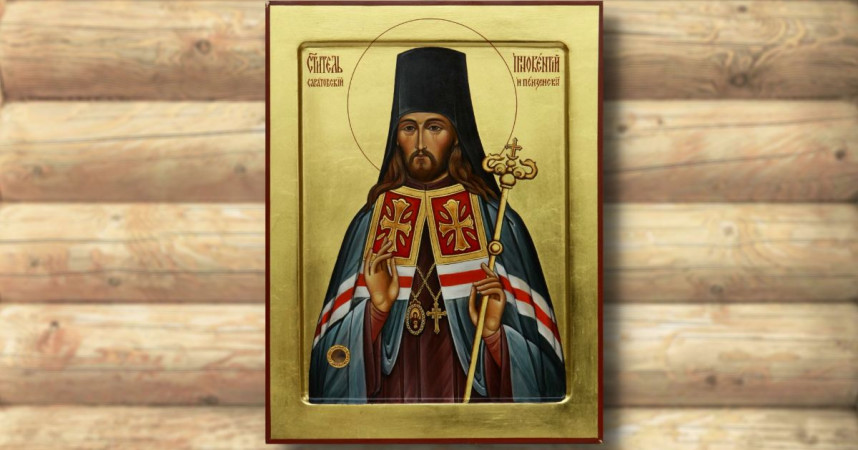
The Church commemorates St. Innocent of Penza
23.10.2026, 06:00







-

“I Praise You, Brothers”: The Spiritual Art of Recognizing the Good
Alexey Shirikov
All Authors